
Coinbase (COIN), Bullish (BLSH) Galaxy (GLXY) may benefit from JPMorgan’s crypto moves

-
News
-
Video
-
Consensus 2026
-
Data & Indices
The Wall Street giant’s move — should it come to pass — would further legitimize crypto and increase distribution channels, said ClearStreet’s Owan Lau.
By Helene Braun|Edited by Stephen Alpher
Dec 23, 2025, 6:08 p.m.

- JPMorgan’s potential entry into institutional crypto trading could legitimize the sector and expand access for traditional finance.
- Analysts say crypto-native platforms like Coinbase, Bullish and Galaxy Digital may benefit from further adoption on Wall Street
- The move may also drive down fees for basic services, pressuring firms like Coinbase and Circle, the analysts said.
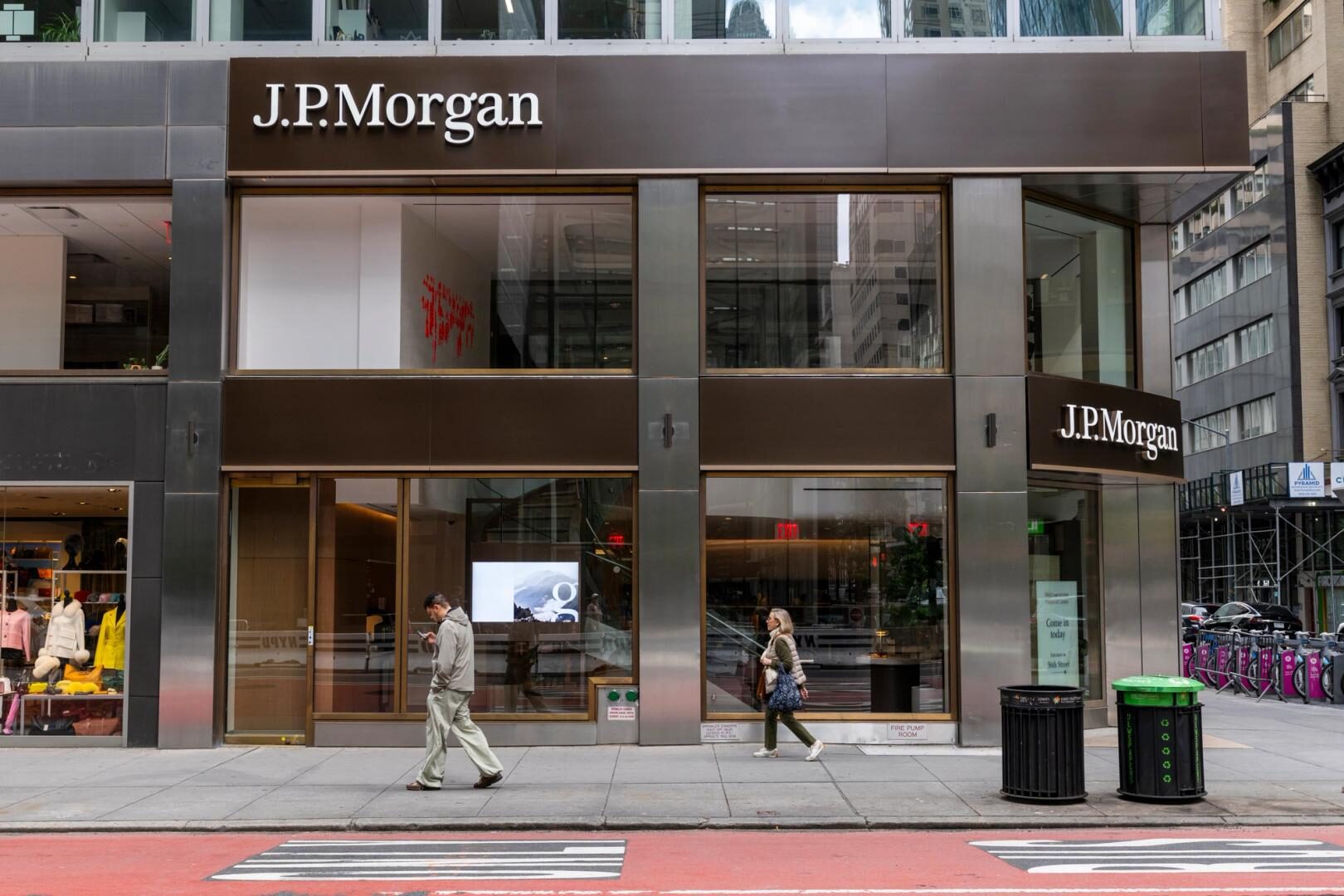
JPMorgan’s (JPM) reported plan to offer crypto trading to institutional clients could reshape the competitive landscape, but not necessarily at the expense of its rivals.
STORY CONTINUES BELOW
According to analysts, the Wall Street giant’s entrance may benefit existing players like Coinbase (COIN), Bullish (BLSH), and Galaxy Digital (GLXY) even as it signals stiffer competition ahead.
“If JPMorgan offers crypto trading to institutional clients, it will be a big positive to the space,” said Owen Lau, analyst at ClearStreet. “It will further legitimize crypto and increase distribution channels,” he continued. “The domino effect will likely cascade down to other banks. Coinbase and Bullish are well positioned to benefit from aggregating and matching institutional orders from this large distribution channel.”
“JPMorgan is a broker, they potentially use exchanges to match the orders,” Lau continued. That opens the door for platforms like Coinbase Prime and Bullish — which already offer institutional-grade crypto execution — to play a key role in settling those trades.
Read more: JPMorgan weighs crypto trading for institutions amid growing demand
Still, the move adds new pressure for incumbents. In a note last week, Compass Point’s Ed Engel wrote that while Wall Street’s growing involvement in crypto “broadens the addressable market for digital assets,” it also intensifies competition.
“Companies like GLXY and BLSH benefit from higher institutional participation while COIN and Circle Financial (CRC)L face risks of margin pressure,” Engel wrote..
As institutional crypto activity picks up, Engel said trading volumes in both spot and derivatives markets are likely to rise, along with demand for lending and custody services — areas where crypto-native firms have already built infrastructure. However, lower-touch services such as basic spot trading may face downward pressure on fees.
“We believe GLXY is a leading beneficiary of Wall Street’s crypto adoption given its focus on principal trading, derivatives and high touch prime brokerage services,” Engel wrote. “BLSH can also benefit from Wall Street’s adoption given that it already offers some of the lowest spot fee rates globally.”
To sum the analyst takes, the potential entry of JPMorgan could draw more traditional institutions into the crypto market. But instead of displacing existing platforms, it may push them deeper into the plumbing of institutional finance — matching trades, providing custody, and offering risk management tools.
In practice, that could look like a pension fund routing a crypto trade through a traditional Wall Street bank, only to have it executed on Coinbase Prime or Bullish. The more demand JPMorgan and any major lender that follows funnels into the system, the more liquidity those platforms can capture.
To this point, JPMorgan hasn’t confirmed the launch of crypto trading for institutional clients, but the move seems more likely than not as the bank has gradually warmed to the sector, including launching its own stablecoin and exploring blockchain settlement tools.
More For You
Dec 19, 2025

L1 tokens broadly underperformed in 2025 despite a backdrop of regulatory and institutional wins. Explore the key trends defining ten major blockchains below.
What to know:
2025 was defined by a stark divergence: structural progress collided with stagnant price action. Institutional milestones were reached and TVL increased across most major ecosystems, yet the majority of large-cap Layer-1 tokens finished the year with negative or flat returns.
This report analyzes the structural decoupling between network usage and token performance. We examine 10 major blockchain ecosystems, exploring protocol versus application revenues, key ecosystem narratives, mechanics driving institutional adoption, and the trends to watch as we head into 2026.
More For You
By Will Canny, CD Analytics|Edited by Sheldon Reback
1 hour ago

APT declined on heavy volume as the CoinDesk 20 index fell 2.8%.
What to know:
- APT dropped 2.8%
- Trading volume was 35% above monthly average.
- The elevated activity validated genuine repositioning despite APT’s relative weakness against larger digital assets.


-
Back to menu
-
Back to menu
Prices
-
Back to menu
-
Back to menu
Indices -
Back to menu
Research
-
Back to menu
Consensus 2026 -
Back to menu
Sponsored
-
Back to menu
-
Back to menu
Podcasts -
Back to menu
-
Back to menu
Webinars
Select Language