
liveUpdated 21 minutes ago
A ceasefire in April collapsed, and U.S. strikes broke a second truce on June 9 with bitcoin giving back the entire move both times.
By Shaurya Malwa and James Van Straten
Share this post
Coinbase CEO Brian Armstrong reiterated his long-term bullish stance on bitcoin, describing it as “the new digital gold” and an increasingly important part of the global economy. Armstrong also suggested that bitcoin may have already found a bottom near the $60,000 level, based on his instincts about current market conditions.
In a post on X, Armstrong wrote: “I’m as bullish as ever on Bitcoin, and still long (as always). It’s never as good or bad as it seems.”
He accompanied the post with a chart illustrating bitcoin’s four-year cycle, a market pattern historically tied to bitcoin’s halving events, which occur roughly every four years and reduce the rate of new supply entering circulation. Previous cycles have typically seen bitcoin reach a peak about 12 to 18 months after a halving, followed by a prolonged correction before establishing a cyclical bottom.
With bitcoin reaching a record high of around $126,000 in October, historical cycle analysis would suggest a potential market bottom could emerge sometime around September or October 2026.
Share this post
“The recent price action in crypto markets was macro relief beta, amplified by thin weekend liquidity, rather than a crypto-native story”, according to @scopicview, head of markets at Laevitas.
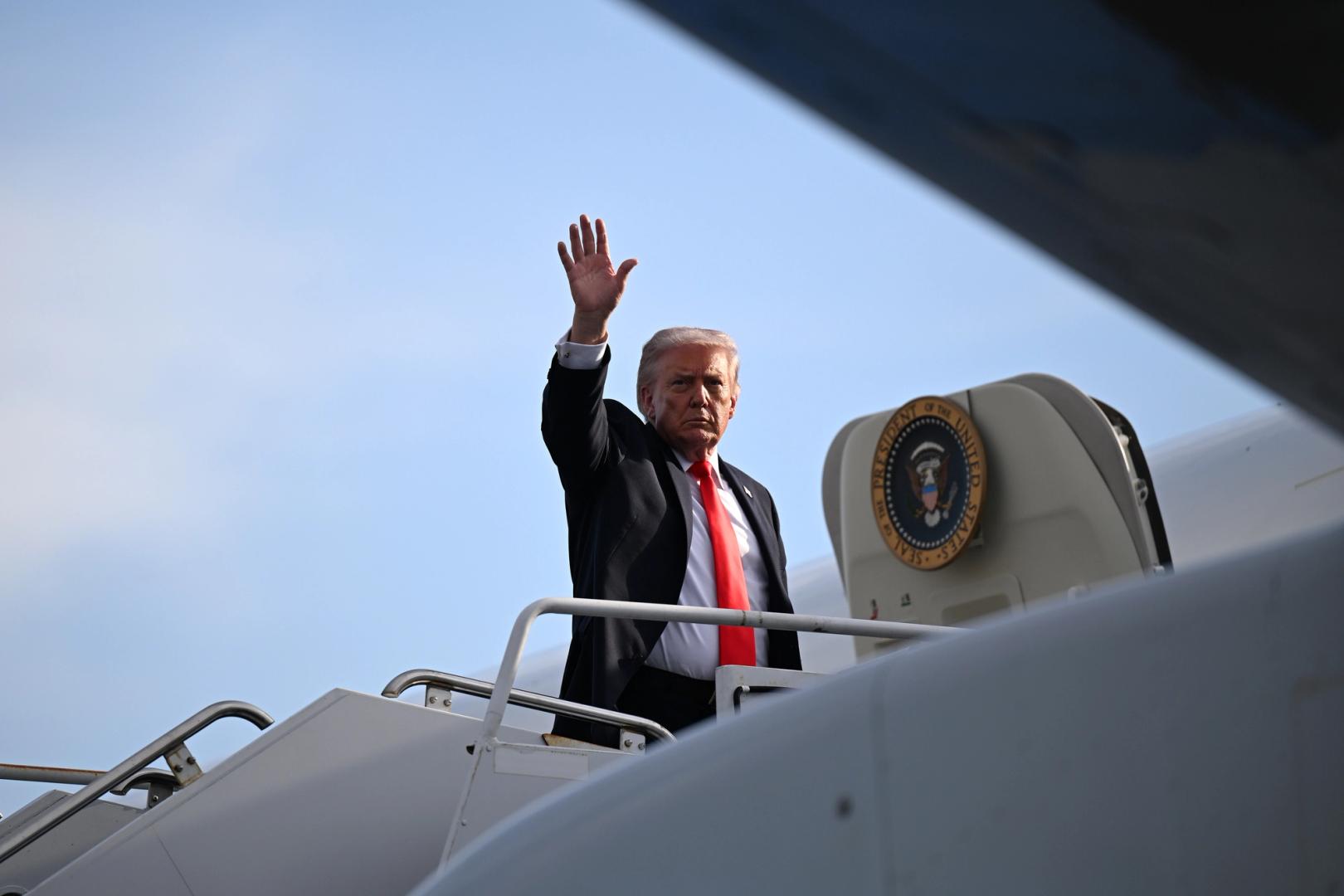
The move was sparked by President Trump’s comments on a potential US-Iran framework, later echoed by all parties, which eased concerns over energy supply disruptions and drove crude oil lower, briefly going below $80 a barrell.
As energy-driven inflation fears receded, risk assets broadly repriced higher, with bitcoin and ether emerging as the highest-beta beneficiaries of the shift in sentiment.
Looking ahead, traders are focused on further confirmation of any agreement, developments around the Strait of Hormuz, crude oil’s next move, and a packed central bank calendar. In crypto, attention remains on whether ETF demand strengthens into sustained inflows and whether spot market buying can support gains initially driven by short covering and thin liquidity.
Share this post
Following the announcement of a U.S., Iran peace agreement, both risk assets and haven investments have rallied. Bitcoin climbed to $66,000, gold surged more than 2.5% to trade above $4,300, and the Invesco QQQ ETF rose more than 2% in Monday pre-market trading.
Crypto-related equities also advanced. Strategy (MSTR), the largest corporate holder of bitcoin, rose 6%, Galaxy Digital (GLXY) added 5% and SpaceX (SPCX) climbed 6%.
AI-focused bitcoin miners are participating in the rally. Both TerraWulf (WULF) and Cipher Mining (CIFR) added 4%, and IREN (IREN) is higher by 5%.
Share this post
ARK Invest bought roughly 3.29 million shares of SpaceX on Friday, the day Elon Musk’s company went public in the largest IPO ever. The buy was worth more than $500 million by the end of the day across four ARK ETFs.
SpaceX priced at $135 and closed at $160.95, up 19.2% on its first day. The Cathie Wood-led firm had offloaded shares across roughly 20 companies in the days around the listing, including Advanced Micro Devices and Rocket Lab, a company SpaceX identified as a competitor in its filing.
The ARK Innovation ETF did the bulk of the buying, ending the day with SpaceX at about 3.28% of its portfolio.
Share this post
Traders have put more than $78 million into bitcoin price prediction markets on Polymarket and Kalshi for 2026, and the crowd is not pricing a breakout, even after the US-Iran peace deal landed Monday.
Polymarket’s June market, with about $15.6 million in volume, puts the most likely recovery point at $67,500 with 70% odds. A move to $72,500 carries 18% odds. The $100,000 target for June sits below 1%. On the downside, bettors give a $55,000 floor an 8% chance.
Kalshi’s June market tells the same story with different numbers. Traders there put a 14% probability on bitcoin crossing $75,000 before June 30, falling to 9% for $77,500 and 5% for $80,000.
The year-end picture is similarly muted. Kalshi’s December market, drawing $25.8 million in volume, has the consensus sitting near $66,000, with the probability distribution bunched in the $50,000 to $55,000 range. Polymarket gives $100,000 by year-end only 19% odds and $150,000 just 4% to 7%.
Share this post
Copper climbed as much as 1.4% after the US and Iran announced an interim deal to halt the war and reopen the Strait of Hormuz.
The industrial metal has gained about 4% since the war began in late February, while aluminum is up 13% as supply routes through the Persian Gulf were severed.
The divergence to bitcoin has an explanation. A ceasefire in April collapsed and US strikes broke a second truce on June 9 – and BTC gave back the entire move both times.
Copper, however, trades on growth expectations and supply routes. Bitcoin has been trained by two failed deals to wait for the June 19 signing in Switzerland before pricing a third.
The channel that would actually move crypto runs through central banks. Cheaper oil softens the inflation pressure that kept the Fed on hold and pushed the Bank of Japan toward a hike at tomorrow’s meeting. Less hawkish policy means less carry-trade unwind risk, which is the weight that has pressed on crypto all month.
Share this post
The US and Iran reached an interim deal to halt the war and reopen the Strait of Hormuz, removing the macro weight that has pressed on crypto for weeks. Oil fell hard and equities jumped, while bitcoin moved only a little.
Brent crude dropped more than 4% toward $83, a three-month low, with the strait that carries about a fifth of the world’s oil set to reopen on June 19. Asian shares climbed more than 3%, and Japan’s Nikkei headed for a record close. Bitcoin trades near $65,000, up modestly over the weekend and still inside its recent $63,000 to $65,000 range, per CoinDesk data.
Traders may remember that bitcoin has been here before. A ceasefire in April fell apart, and US strikes broke another truce on June 9, each time clawing back the relief rally.
Traders are not pricing a permanent deal until the June 19 signing in Switzerland holds. The deal is interim, as sanctions are unresolved and Trump has said he could restart strikes if nuclear talks fail.
The bigger channel for crypto runs through inflation, not the headline.
Cheaper oil eases the price pressure that pushed central banks toward tighter policy. Meanwhile the Bank of Japan decides tomorrow, and a softer inflation backdrop could blunt the hawkish tilt that revived the yen carry-trade risk.
That is the path that would actually pull liquidity back toward crypto.

- 1
- 2
- 3
- 4
- 5
- 6
- 7
- 8
- 9
Summer of crypto (regs): State of Crypto
15 hours ago
- 10


Binance’s US-equities launch already outpaces the tokenized market – and with bStocks live, it now competes on composability too. Real shares and tokens, one platform.
1 hour ago
Binance’s US-equities launch already outpaces the tokenized market – and with bStocks live, it now competes on composability too. Real shares and tokens, one platform.
Why it matters:
Binance’s US-equities launch already outpaces the tokenized market – and with bStocks live, it now competes on composability too. Real shares and tokens, one platform.