
Zcash Ironwood goes live, here’s everything to keep track of
The upgrade retires Orchard, where a counterfeiting bug sat undetected for four years. Every coin inside now has to leave through a gate that caps withdrawals at verified deposits.
By Shaurya Malwa|Edited by Nikhilesh De
Jul 28, 2026, 2:35 p.m.
Share this article

Summary
Zcash activated its Ironwood upgrade at block 3,428,143 on Tuesday, sealing the so-called “shielded pool” that holds most of the network’s private funds and opening a migration into a pool that starts from zero tokens.
Ironwood, formally known as NU6.3, retired the previous pool known as Orchard, which holds about 3.66 million ZEC, worth roughly $1.7 billion at current prices.
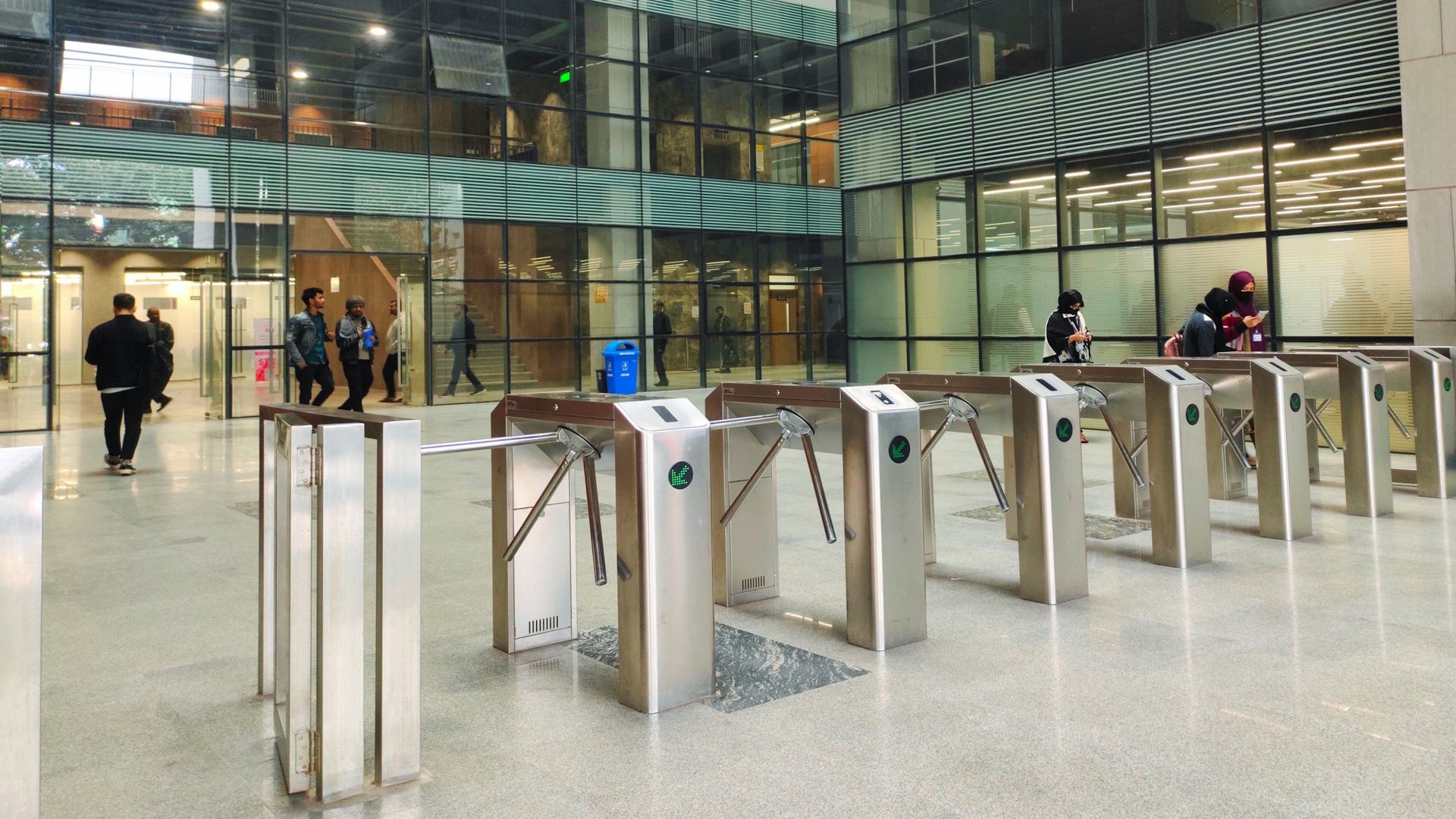
Ironwood held zero ZEC at activation, trackers showed. Every coin has to be moved across by its owner, and the only route out of Orchard is a turnstile — an accounting rule at the pool’s boundary that caps total withdrawals at the amount verifiably deposited.
Shielded pools are the private side of Zcash, where the amounts of coins and participants are hidden. A zero-knowledge proof provides evidence that the amount deposited is reflected publicly.
On May 29, Shielded Labs researcher Taylor Hornby found that Orchard’s proof circuit contained a bug that would let an attacker mint counterfeit ZEC, leaving no onchain trace. The flaw had been live since Orchard launched in May 2022.
But evidence points away from exploitation, a CoinDesk Research report found in July. If someone had minted counterfeit ZEC, the obvious next step would be to move it out and sell it, which would show up as funds leaving the pool. However, Orchard’s balance grew steadily through the four years the flaw was open, including through last year’s price rally, when cashing out would have been most profitable.
Developers patched the bug within days, but the patch could not account for the four years it was open. A zero-knowledge proof reveals nothing beyond the facts that it verified, so the chain holds no record of whether any Orchard transaction actually moved, and nobody can prove counterfeit coins were never created.
The turnstile is an answer to that. Money crossing into or out of a shielded pool is public even when the transactions inside are not, so the network already knows how much ZEC went into Orchard and will not release more than that. Any counterfeit coins sitting inside are stuck there.
As of press time, 1,500 ZEC have already moved into the new pool, according to a tracker.
Ironwood also launched with two protections Orchard never had. The record each coin leaves on the chain is built to stay recoverable if quantum computers eventually break the cryptography now securing it, a property specified under ZIP 2005 and in place from the first block.
And the pool’s proof circuit, the code that checks every private transaction is valid, is undergoing formal verification, which produces a mathematical proof that software behaves correctly in every possible case rather than only in the cases a tester thought to try. The aim is to rule out the class of bug that broke Orchard.
ZEC traded near $463 ahead of the switch, down 8% on the day and 15% over the week, though it remains up roughly tenfold over the past year.
The number to watch from here is how fast the 3.66 million ZEC actually moves. Migration is voluntary and user-driven, and until it happens, the bulk of Zcash’s private supply sits in a pool nobody can add to.

- 1
- 2
- 3
- 4
- 5
- 6
- 7
- 8
- 9
- 10


Markets repositioned since June, but Binance held share (~55% user funds, ~24% spot) and drew net inflows in early July while the tracked market saw outflows.
Jul 22, 2026
Markets repositioned since June, but Binance held share (~55% user funds, ~24% spot) and drew net inflows in early July while the tracked market saw outflows.
Why it matters:
Markets repositioned since June, but Binance held share (~55% user funds, ~24% spot) and drew net inflows in early July while the tracked market saw outflows.