
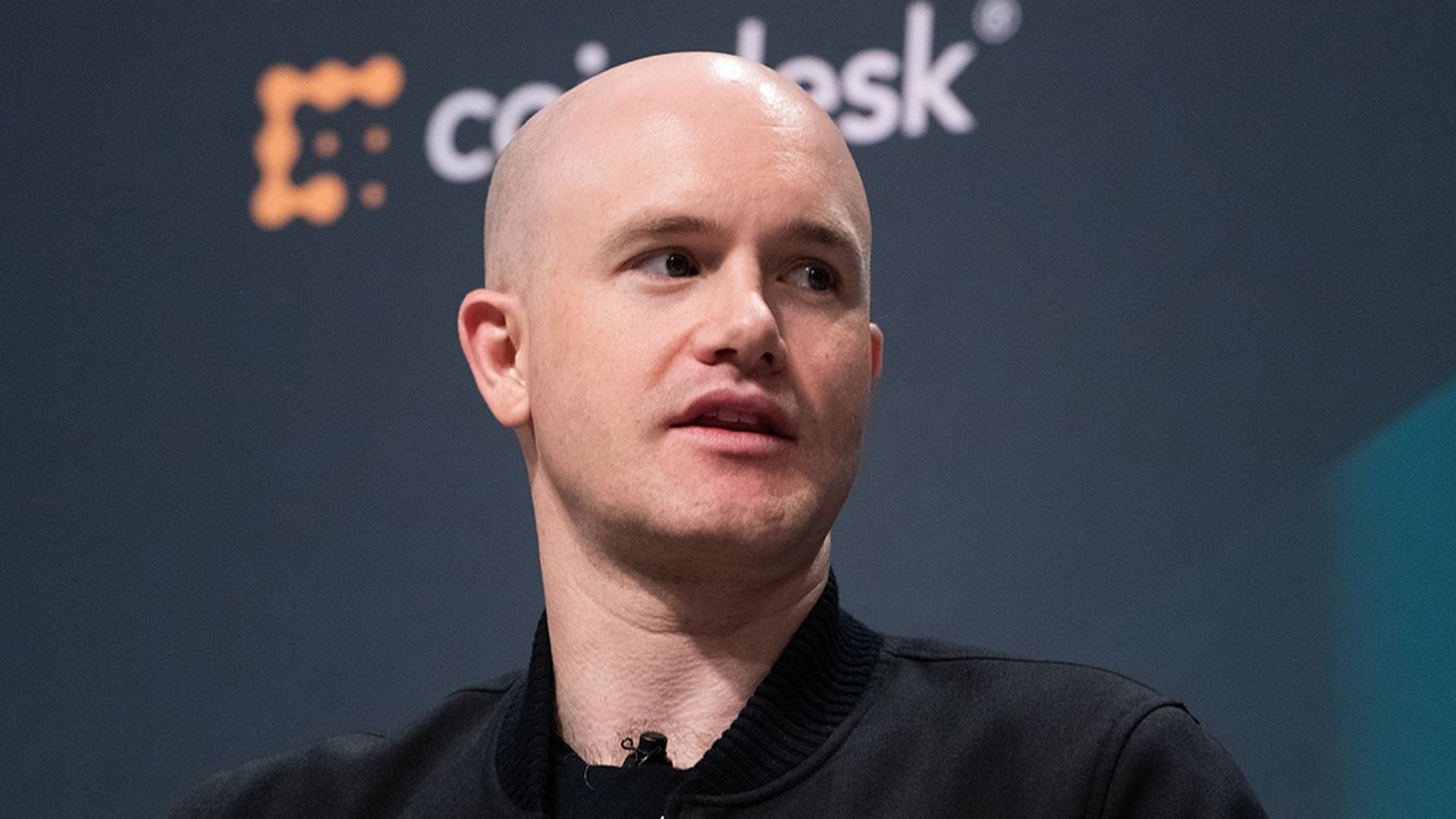
Coinbase (COIN) hit by spot trading slump: Wall Street trims Q2 earnings expectations
Wall Street expects a sluggish second quarter from Coinbase as crypto trading activity cools, putting all eyes on and pending U.S. crypto legislation.
By Helene Braun|Edited by Jamie Crawley
Jul 29, 2026, 3:15 p.m.
Share this article

Summary
Coinbase (COIN) reports second-quarter results Thursday after the close, but analysts covering the company largely agree that the headline numbers may matter less than management’s outlook for the second half of the year and the evolving regulatory landscape.
The consensus view is that Q2 was another difficult quarter for crypto trading. Spot trading volumes fell across the industry as investors remained cautious, bitcoin BTC$64,021.76 and ether (ETH) traded lower on average than in the prior quarter and retail participation stayed muted. Crypto markets remained under pressure through most of the second quarter, with bitcoin losing roughly 14% during the period while ether dropped about 25%. While June showed some improvement, most analysts say it wasn’t enough to offset weakness in April and May.
Where analysts differ is in how much that slowdown will hurt Coinbase’s results and how quickly newer businesses can reduce the company’s dependence on trading fees.
Barclays, Benchmark, Clear Street and Compass Point all cut estimates ahead of earnings, citing lower spot trading activity.
Barclays analyst Benjamin Budish estimates Coinbase processed roughly $152 billion of trading volume during the quarter, well below the Street’s expectation of about $178 billion. He expects adjusted EBITDA to come in roughly 3% below consensus, pointing to weaker blockchain rewards and institutional trading revenue.
Clear Street’s Owen Lau also lowered estimates, projecting approximately $160 billion in trading volume and $301 million in adjusted EBITDA after weaker-than-expected retail activity.
Benchmark’s Mark Palmer similarly reduced his EBITDA forecast to $377 million, while Compass Point expects revenue to slightly miss consensus but believes EBITDA will be roughly in line with expectations.
Coinbase still rises and falls with crypto trading activity, a dependency that has become more apparent over the past year. The company has spent heavily to diversify revenue through stablecoins, derivatives, payments, tokenization and its Base blockchain. Those businesses continue to grow, but they remain relatively small compared with transaction revenue.
One area where analysts are more constructive is subscription and services revenue.
This segment includes interest income from USDC, staking rewards, custody fees, Coinbase One subscriptions and institutional services. Because those businesses are less tied to daily trading volumes, analysts expect them to provide a cushion against weaker transaction revenue.
Benchmark expects subscription and services revenue to “provide ballast,” while Barclays projects revenue near the lower end of Coinbase’s guidance, reflecting softer crypto prices and only modest growth in USDC balances. Compass Point is somewhat more cautious, arguing the segment could land below the midpoint of management’s guidance because of weaker crypto prices and slower stablecoin growth.
Although Q2 results may look soft, analysts will closely watch management’s comments on newer products.
Prediction markets have emerged as one of Coinbase’s fastest-growing businesses following increased activity around sporting events. Barclays believes the category is becoming a meaningful contributor, while Clear Street sees prediction markets as one of several long-term growth drivers.
Not everyone agrees on the economics. Compass Point argues investors may overestimate the profitability because Coinbase records gross revenue while sharing economics with Kalshi, making net contribution smaller than headline figures suggest.
Derivatives are another area of interest. Coinbase’s international perpetual futures business and its acquisition of Deribit give the company exposure to a much larger global market than spot trading alone. Analysts generally see derivatives as a long-term opportunity, though most say they contributed little to offset weaker spot volumes during Q2.
Perhaps the biggest debate isn’t about the quarter itself but about Washington.
The Clarity Act, which would establish a regulatory framework for digital assets in the U.S., remains a major focus for investors.
Benchmark believes recent movement on ethics provisions has materially improved the odds of Senate passage, making the legislation one of the most important potential catalysts for Coinbase’s stock. Barclays, on the other hand, is more cautious, warning that the legislative calendar remains tight and that competing priorities could still delay the bill.
Compass Point is the most skeptical, arguing the Senate’s timetable leaves little room before the August recess and warning that Coinbase’s valuation could come under pressure if the legislation stalls.
The earnings numbers themselves may ultimately be backward-looking.
Investors are likely to focus on management’s guidance for Q3, updates on layoffs and expense reductions, progress in derivatives and prediction markets and whether Coinbase is beginning to rely less on crypto’s trading cycle.
That transition remains the central investment debate. Bulls argue Coinbase is steadily building multiple recurring revenue streams that can smooth earnings over time. Bears counter that, despite those efforts, the business still depends heavily on retail crypto activity and Q2 is expected to reinforce that reality.
COIN shares traded around 1.7% lower at $165 as of writing on Wednesday.
Related Assets

- 1
- 2
- 3
- 4
- 5
- 6
- 7
- 8
- 9
- 10


Anvil is a shared on-chain collateral layer built on a programmable letter of credit: reserve assets as a guarantee -no loan, no interest, keep custody & yield.
2 hours ago
Anvil is a shared on-chain collateral layer built on a programmable letter of credit: reserve assets as a guarantee -no loan, no interest, keep custody & yield.
Why it matters:
Anvil is a shared on-chain collateral layer built on a programmable letter of credit: reserve assets as a guarantee -no loan, no interest, keep custody & yield.