
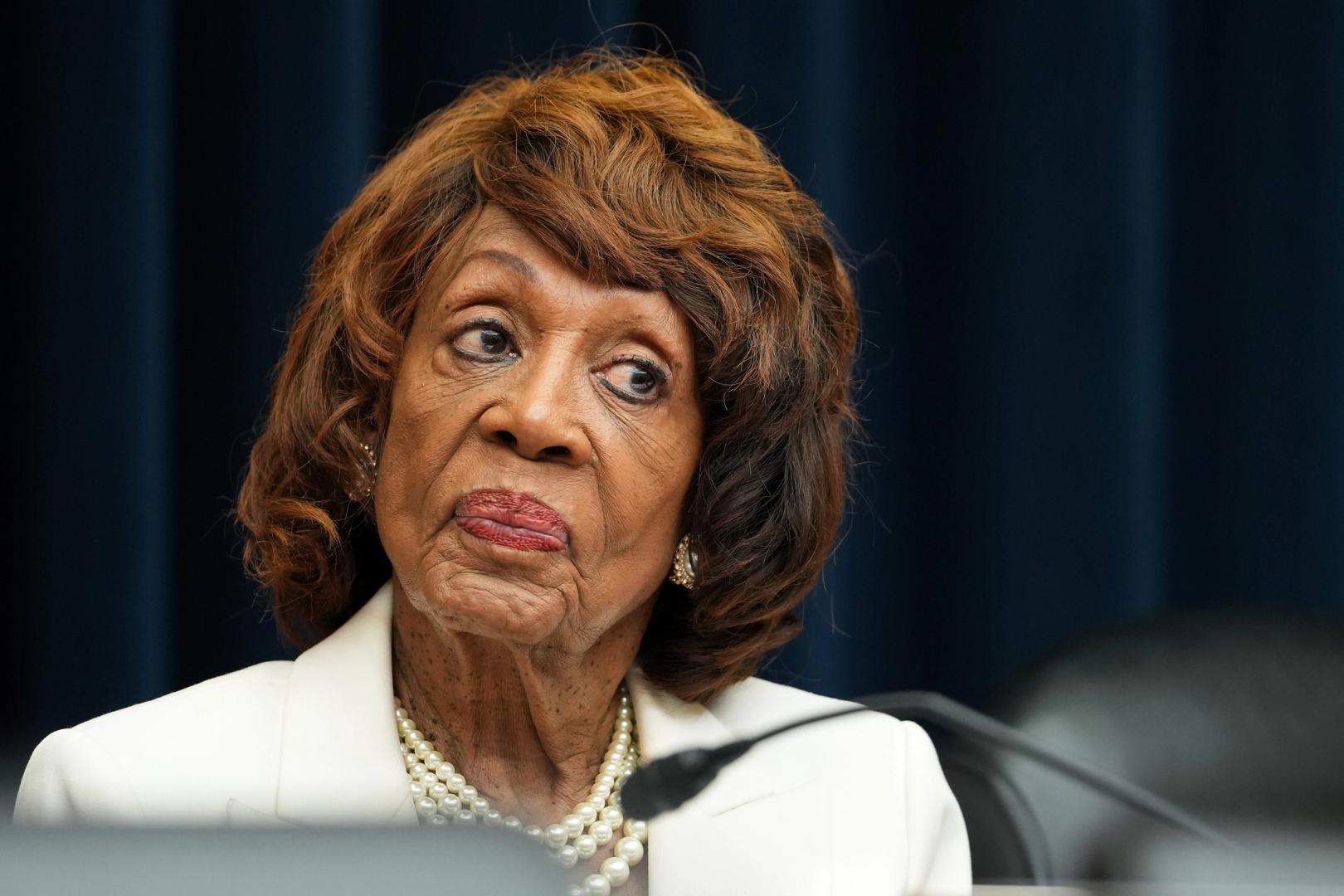
If crypto goes back to the congressional drawing board, 3 Democrat women loom large
The Democrats who may get a bigger say in future crypto legislative efforts are familiar figures, and they generally look at digital assets with distrust.
By Jesse Hamilton|Edited by Nikhilesh De
Updated Published
Share this article

Summary
Next January, there’s a strong chance that U.S. Representative Maxine Waters will steer the destiny of legislation to establish crypto market rules.
The California Democrat stands in line to return to the helm of the House Financial Services Committee, just as a number of other senior Democrats await their potential committee gavels if their party manages to secure majorities in the U.S. House of Representatives or Senate. If Waters takes over her panel, counterpart Representative Shontel Brown could rise to the top of the House Agriculture Committee, the other committee that would likely be in a position to pursue crypto legislation.
If the crypto industry and its congressional allies have to toss the Digital Asset Market Clarity Act in the same bin where they once left its predecessor, the Financial Innovation and Technology for the 21st Century Act (FIT21), potential Democrat committee leaders are unlikely to see crypto regulation occupy the level of priority the current Republicans maintain.
“Regardless of how you feel about crypto, we can’t just ignore it,” said Blockchain Association CEO Summer Mersinger in a CoinDesk interview. “It’s here, and the best thing that we can do is create a federally federal regulatory structure for it. It’s hard to argue against that, regardless of whether you like crypto or not.”
The betting on Kalshi predicts a Democratic House majority at an 84% likelihood, though that chance is much less (a 47% coin toss) for the Senate, where Democrats face a tougher election battlefield this year. But if they prevail, a Democratic Senate could mean Senator Elizabeth Warren — the bane of crypto lobbyists — ascends to lead the key Senate Banking Committee.
President Donald Trump has made it a special goal to welcome crypto into the U.S. financial regulation tent, with a major win on stablecoins and a contentious fight on market structure. But many of his Democratic political foes have spent considerable time focusing on severing Trump’s own crypto business ties. They’ll almost certainly pursue congressional investigations of his digital assets activity if they’re running the agenda.
Waters has been among the critics of Trump’s motives. However, the California lawmaker also had once negotiated an earlier stablecoin effort just inches from the finish line in 2022 — a predecessor to last year’s successful Guiding and Establishing National Innovation for U.S. Stablecoins Act (GENIUS) Act. While she’s shown a past willingness to take crypto seriously as a topic of legislation, she has been aggressively critical of the Clarity Act (which is facing a narrowing chance for a vote in the Senate).
She called it the “Calamity Act,” saying it would “create giant loopholes in our federal financial laws that would put consumers and investors at risk,” and it would handcuff the regulators policing the sector. Waters also staged a walk-out of a Clarity hearing in her committee.
She also recently opposed crypto in people’s retirement accounts and, last year, pushed one of several bills targeting Trump’s crypto empire.
If Waters focused on countering Trump’s crypto activity in a return as chairwoman, even a legislative win probably wouldn’t negate the president’s potential conflicts of interest, because he’d be in a position to veto it. Her office didn’t respond to a request for comment on her plans.
The House and Senate each have a pair of committees that are most centrally engaged on crypto policy, thanks to the U.S.’s unusual split of regulation between separate agencies that concentrate on securities (the Securities and Exchange Commission) and derivatives (the Commodity Futures Trading Commission). So, the agriculture committees in both chambers oversee the CFTC, and the SEC is under the jurisdiction of the Senate Banking committee and House Financial Services Committee.
Shontel Brown is a strong possibility to lead the House Agriculture Committee if Democrats secure the majority, and that’s another potential problem for crypto. The Ohio Democrat has opposed all digital assets bills in the past, up to the Clarity Act, earning an “F” grade from crypto advocacy group Stand With Crypto. However, she said she could get behind crypto policy that “protects consumers and allows innovation to benefit everyone.”
“I voted against the GENIUS and Clarity acts because they fail to adequately address abuse and instead open the door to corruption,” she said last year. “At a time when the current occupant of the Oval Office is personally benefiting from crypto and memecoin ventures, these bills do nothing to close conflict-of-interest loopholes.”
But if Waters and Brown are running the crypto show in the House, the White House will still have its same occupant. Even if the Democrats win a stronger majority than the narrow GOP advantage of the past two years, the next session could become a mess of go-nowhere, message-sending bills. If the party won the Senate majority, too, that wouldn’t help assure Democrats an ability to get legislation converted to law.
On the Senate side, Senator Warren has been among the crypto industry’s most prominent Capitol Hill detractors, trying to keep a steady spotlight on what she’s portrayed as the president’s crypto corruption. However, under her time as the ranking Democrat on the Senate Banking Committee, she watched her fellow Democrats go against her on crypto matters, gathering for negotiations on the legislation she opposed.
She may have more sway were she to lead the committee and control the advancement of her members’ bills. If she were to follow in the footsteps of the most recent Democrat who ran the banking panel, former Senator Sherrod Brown, she could go for years without allowing a crypto measure through the gate. (Brown, who was defeated by Republican crypto advocate Senator Bernie Moreno two years ago with the help of a massive $40 million crypto PAC boost, is also running again for the other Ohio Senate seat.)
On the Senate Agriculture committee, Senator Amy Klobuchar has been the top Democrat, but there’s a strong chance she’s heading toward the Minnesota governor’s mansion this year. That would leave Senator Michael Bennet of Colorado next in line of seniority, since he fell short in his own governor bid when he lost in his state’s June primary.
Bennet has voted against crypto policies at every turn, and he introduced a bill in May that would have imposed crypto bans on government officials — including the president — in language much stronger than the compromise effort that was in the Clarity Act.
All four of these leading Democrats in the relevant committees — Waters, Brown, Warren and Bennet — have matching “F” ratings from Stand With Crypto. So if the Clarity Act fails to advance during its brief Senate window in September, it’s likely that the crypto industry would be facing significant headwinds when it tries again.
Still, Digital Chamber CEO Cody Carbone, whose Washington group has been among those trying to push the legislation through Congress, argued that crypto should still be considered “non-partisan.”
“We will always want to work with every lawmaker on commonsense solutions for this industry,” he said to CoinDesk in a statement. “We have worked with many of the likely chairs, regardless of which party controlled Congress.”

- 1
- 2
- 3
- 4
- 5
- 6
- 7
- 8
- 9
- 10


Zcash’s Tachyon upgrade aims to scale shielded payments, improve quantum readiness, and test whether its funding, security, and governance can hold.
Jun 30, 2026
Zcash’s Tachyon upgrade aims to scale shielded payments, improve quantum readiness, and test whether its funding, security, and governance can hold.
Why it matters:
Zcash’s Tachyon upgrade aims to scale shielded payments, improve quantum readiness, and test whether its funding, security, and governance can hold.