
Circle (CRCL) debuts Arc blockchain in biggest bet yet beyond $74B USDC stablecoin
The USDC issuer’s chain is built for payments, tokenized assets and institutional finance as banks and payment giants pile into the stablecoin market.
By Krisztian Sandor|Edited by Jamie Crawley
Share this article

Summary
Circle CRCL$84.91·Market Closed launched its Arc blockchain on Wednesday, making its biggest push yet beyond issuing the $74 billion stablecoin USDC
USDC$1.0004
.
Competition is heating up to among the largest blockchain companies to provide the rails for moving money and financial assets onchain.
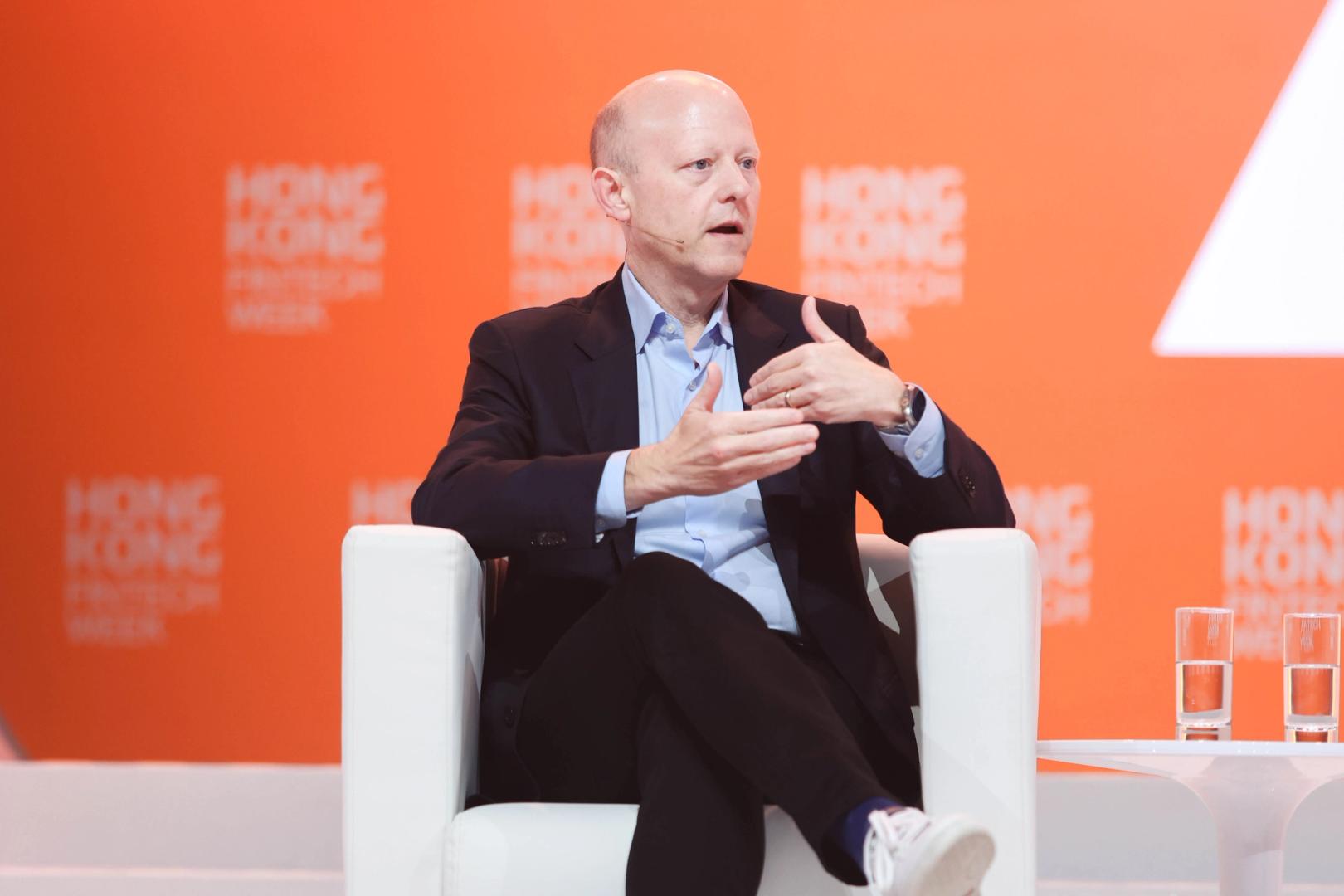
“This is, I believe, the most consequential major platform launch in our history, and I think an even more consequential launch than USDC itself,” said Circle CEO Jeremy Allaire during a press briefing.
The stablecoin market, Circle’s main business, is becoming increasingly competitive, with banks and payment firms entering the race.
A group of 21 financial institutions including Bank of America, Citi and Goldman Sachs is preparing a dollar stablecoin for the first half of 2027, while European bank consortium Qivalis is working toward a euro token. Meanwhile, payments giant Stripe pushes deeper into crypto with Open Standard’s upcoming Open USD stablecoin and Tempo, the payments-focused blockchain it incubated with Paradigm.
Circle aims to compete beyond the stablecoin itself with Arc. Allaire described the chain as a general-purpose “economic operating system” for payments, tokenized financial markets, lending, trading and, eventually, commerce between AI agents.
Circle’s Arc kicks off with a wide roster of heavyweight institutions that stretches well beyond crypto-native firms.
BlackRock, DTCC, Intercontinental Exchange, Mastercard, Standard Chartered and Visa are among Arc’s founding validators, while BNY, HSBC and State Street are some of the 100+ institutions and ecosystem companies live on or exploring the network.
Trading venues on Arc include Uniswap and Aerodrome, while Aave and Morpho are providing lending markets. Tokenized money market funds including Circle’s USYC and BlackRock’s BUIDL are also coming to the network.
Allaire called Arc a “canonical home for asset issuers,” where funds, equities, commodities and currencies could be issued before moving to other blockchain ecosystems through Circle’s interoperability infrastructure.
Circle Payments Network is also being integrated directly into Arc alongside StableFX, its foreign-exchange platform for 24/7 cross-currency settlement.
Arc was designed around some of the friction that has kept traditional financial institutions from using existing blockchains, Allaire said.
Circle is developing configurable privacy for institutions that need to shield transaction data while retaining access for auditors and regulators.
Transaction fees are paid in USDC rather than a volatile native token, with sub-second finality and a permissioned validator set.
Allaire compared requiring companies to hold a blockchain’s native token just to use the network with making Netflix buy Amazon shares to pay its Amazon Web Service bill.
“That would be crazy,” he said.
Arc, however, still has its own network token.
Circle said it completed the genesis mint of the full initial supply of 10 billion ARC tokens this week. Allaire stressed that the token is not yet available to the public, and Circle said the mint does not represent a commitment to publicly launch it.
The network currently uses proof of authority, with Circle exploring a transition to proof of stake in 2027 that could give ARC a role in security, governance and utility. Network fees would continue to be paid in USDC.
Circle raised $222 million in a token presale in May at a $3 billion network valuation, drawing backing from investors including Apollo Funds, ARK Invest, BlackRock and CoinDesk parent company Bullish.
Arc creates a new balancing act for Circle, which built USDC by distributing it across many competing networks.
Allaire compared the strategy with Google operating its own platforms while continuing to make products such as Gmail and YouTube available on rival systems.
“We’re committed to make sure that our digital assets and our apps that we build are widely available on the most popular platforms and networks in the world,” he said.
Arc, however, is also meant to become a new growth engine for Circle.
Allaire called the network a “new business” and said the company intends for it to become “one of the leading, if not the leading platform” as more financial activity moves onchain.
Related Assets
Related Stocks
Market Closed

- 1
- 2
- 3
- 4
- 5
- 6
- 7
- 8
- 9
- 10


12 hours ago
Why it matters:
As stablecoins move into regulated finance, APAC is becoming a key proving ground. This report maps the region’s rules, use cases, and RLUSD’s role.