
Bitcoin cost bases point to resistance at $88,000 and support near $82,300
Yearly buyer cohorts and U.S. spot ETF investors offer a map of potential support and resistance as bitcoin retreats below $84,000.
By James Van Straten|Edited by Jamie Crawley
Share this article

Summary
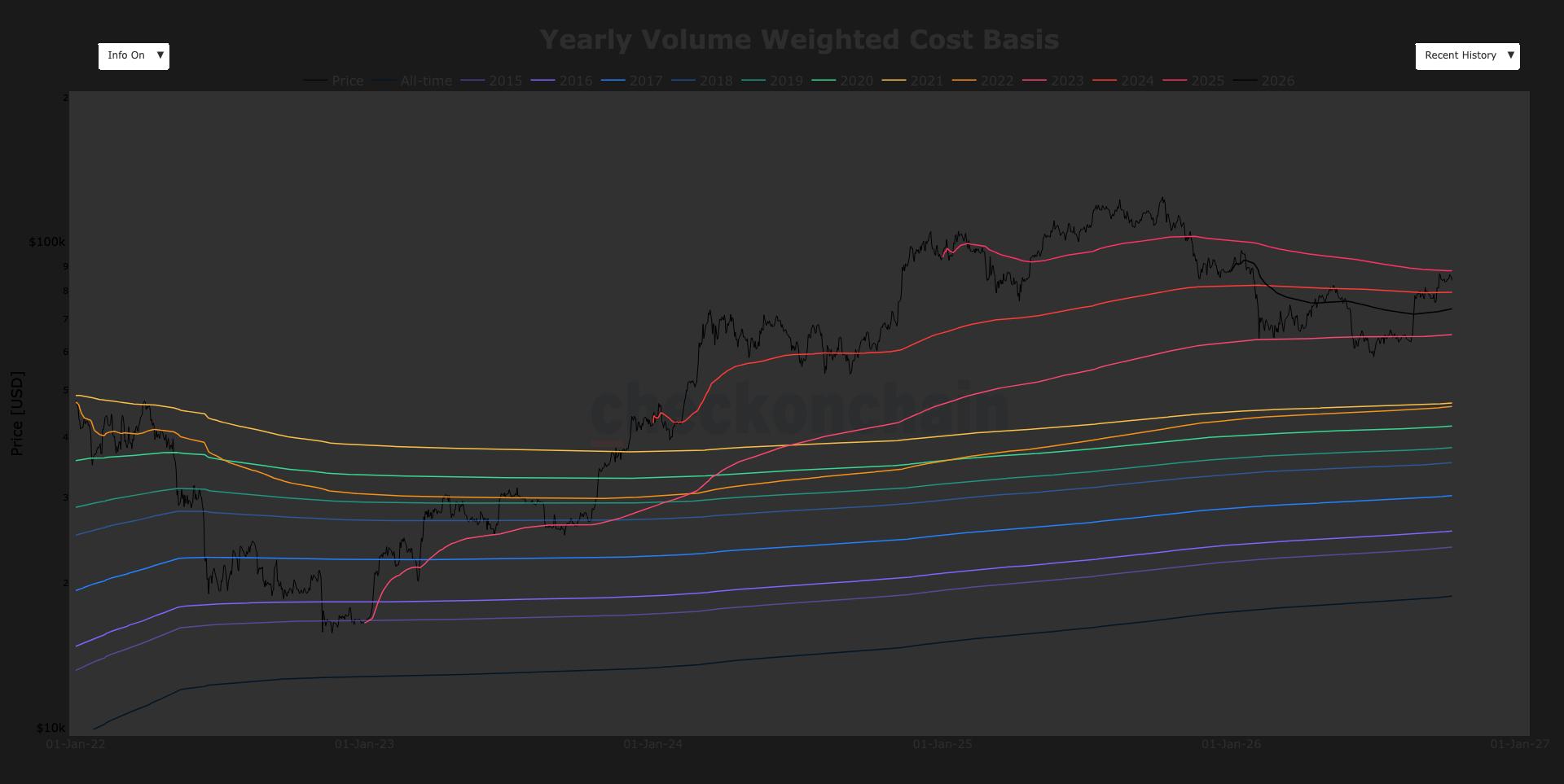
Only one yearly bitcoin BTC$83,692.98 buyer cohort remains underwater, according to checkonchain data: investors who bought in 2025, with an average cost basis of approximately $88,000, which may now be forming a key resistance level due to sell pressure from relatively recent buyers.
Bitcoin reached a monthly high of $87,500 in September before trading sideways and subsequently retreating below $84,000 as of Wednesday.
These yearly volume-weighted cost bases have acted as support and resistance throughout the cycle. As bitcoin approaches a cohort’s average purchase price, some investors may look to exit at breakeven, while others may add to their positions.
Bitcoin climbed to approximately $82,100 in May, matching the 2024 cohort’s average cost basis, before encountering resistance and falling back to $60,000. It eventually broke above that level in August.
The 2023 cohort’s cost basis, currently around $65,000, has provided a recurring support level. When bitcoin fell towards $60,000 in February, that cohort’s cost basis was also near that level. It broadly held as support throughout the 2026 bear market, although bitcoin briefly traded below it.
The 2026 cohort has an average cost basis of approximately $73,500. These buyers have largely been in profit since late August, when bitcoin rallied above that threshold.
Another level to watch is the U.S. spot bitcoin ETF cost basis, which measures the average cost of deposits into the funds and currently stands at approximately $82,300. ETF investors only recently returned to profit for the first time this year, making this a potential support level if bitcoin falls further.

Related Assets

- 1
- 2
- 3
- 4
- 5
- 6
- 7
- 8
- 9
- 10


Sep 15, 2026
Why it matters:
As stablecoins move into regulated finance, APAC is becoming a key proving ground. This report maps the region’s rules, use cases, and RLUSD’s role.