
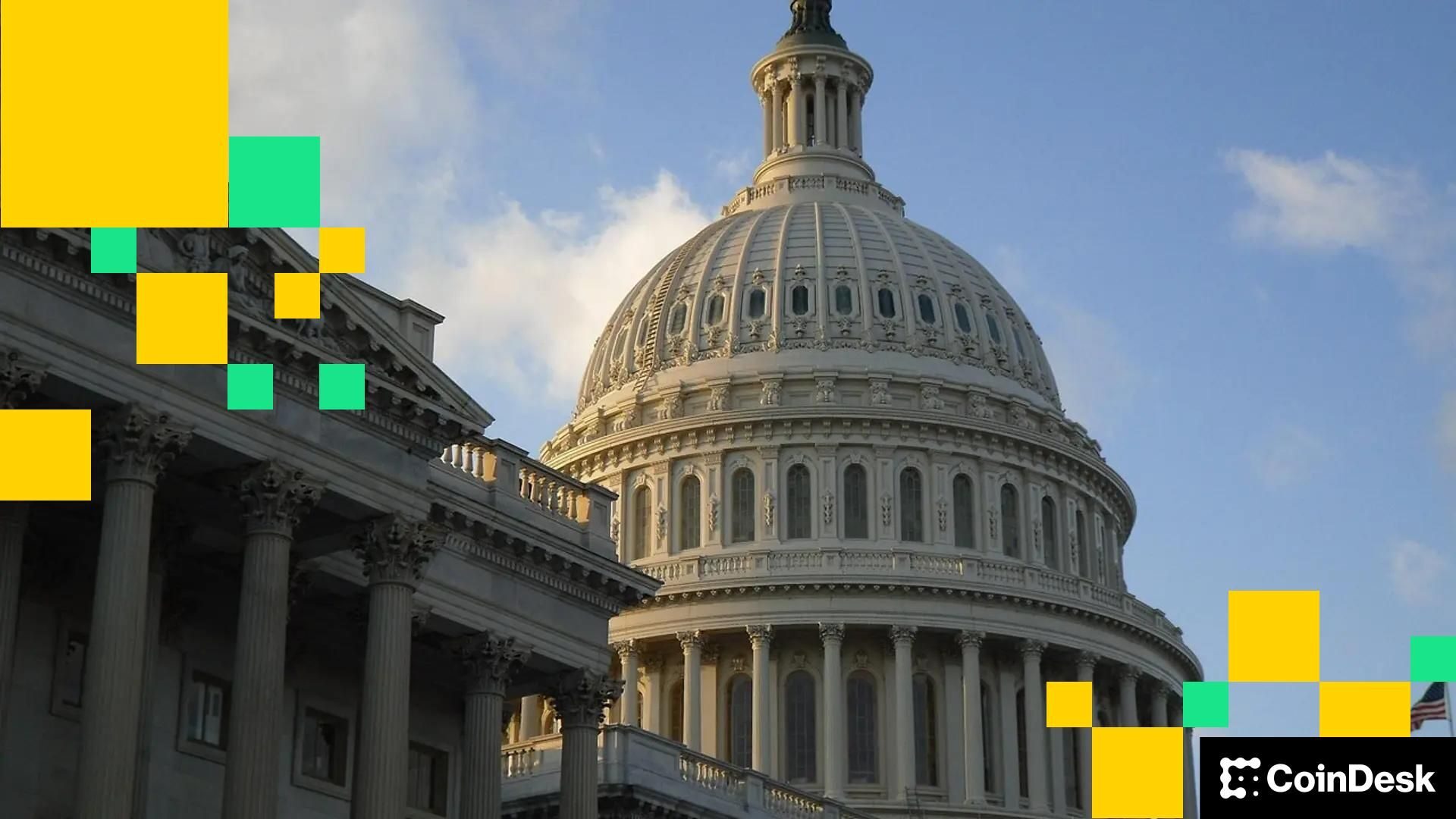
Grayscale sees regulation, not quantum computing fears, shaping crypto markets in 2026.

-
News
-
Video
-
Consensus 2026
-
Data & Indices
U.S. market structure legislation is poised to be the dominant force for digital assets, while near-term concerns about quantum computing are overdone.
By Will Canny, AI Boost|Edited by Sheldon Reback
Dec 30, 2025, 1:42 p.m.

- Grayscale expects a bipartisan U.S. crypto market structure bill to pass in 2026.
- Clearer rules could accelerate institutional adoption and onchain activity.
- Quantum computing risks are real, but unlikely to affect prices next year, the asset manager said.
As 2025 draws to a close, investor attention is converging around two big questions: how quickly Washington will deliver a comprehensive regulatory framework for digital assets, and whether advances in quantum computing pose an imminent threat to blockchain security, crypto asset manager Grayscale said in a Monday report.
In Grayscale’s view, one of these debates is likely to reshape markets in the near term, while the other may prove more of a distraction than a driver.
STORY CONTINUES BELOW
The firm’s analysts expect a bipartisan crypto market structure bill to become law in 2026, marking a milestone for the asset class.
While negotiations remain over key details, the analysts said the broad direction is clear: Lawmakers are moving toward a traditional financial-market rulebook for crypto, covering registration and disclosure requirements, clearer classifications of digital assets and guardrails for insiders.
A more complete and harmonized regulatory framework in the U.S., and potentially across other major economies, could have practical consequences for adoption.
Regulated financial services firms may become more comfortable holding digital assets on their balance sheets, while increased legal clarity could encourage institutions to transact directly on blockchains. The report argued that such developments would mark the early stages of a more institutional era for crypto markets.
In contrast, the analysts see concerns about quantum computing as a legitimate but overstated theme heading into 2026.
The firm expects the topic to generate headlines and debate, but says it is unlikely to materially influence asset prices in the near term. Grayscale acknowledged that, in theory, sufficiently powerful quantum computers could undermine today’s cryptographic standards by deriving private keys from public ones, potentially enabling fraudulent transactions.
Over the long run, Grayscale says most blockchains, including Bitcoin, along with much of the broader digital economy, will need to upgrade to post-quantum cryptography. However, the firm believes those risks remain distant for now. While markets may eventually assess blockchains based on how prepared they are to address the quantum challenge, this will not meaningfully affect valuations next year.
Read more: Crypto asset manager Bitwise says bitcoin will break its four-year cycle in 2026
AI Disclaimer: Parts of this article were generated with the assistance from AI tools and reviewed by our editorial team to ensure accuracy and adherence to our standards. For more information, see CoinDesk’s full AI Policy.
More For You
Dec 19, 2025

L1 tokens broadly underperformed in 2025 despite a backdrop of regulatory and institutional wins. Explore the key trends defining ten major blockchains below.
What to know:
2025 was defined by a stark divergence: structural progress collided with stagnant price action. Institutional milestones were reached and TVL increased across most major ecosystems, yet the majority of large-cap Layer-1 tokens finished the year with negative or flat returns.
This report analyzes the structural decoupling between network usage and token performance. We examine 10 major blockchain ecosystems, exploring protocol versus application revenues, key ecosystem narratives, mechanics driving institutional adoption, and the trends to watch as we head into 2026.
More For You
By CD Analytics, Will Canny|Edited by Sheldon Reback
56 minutes ago

APT broke through key resistance levels on institutional buying activity.
What to know:
- APT climbed 1.3% to $1.73 as trading volume jumped 12% above weekly averages.
- The token pierced $1.72 resistance on sustained institutional flows.


-
Back to menu
-
Back to menu
Prices
-
Back to menu
-
Back to menu
Indices -
Back to menu
Research
-
Back to menu
Consensus 2026 -
Back to menu
Sponsored
-
Back to menu
-
Back to menu
Podcasts -
Back to menu
-
Back to menu
Webinars
Select Language