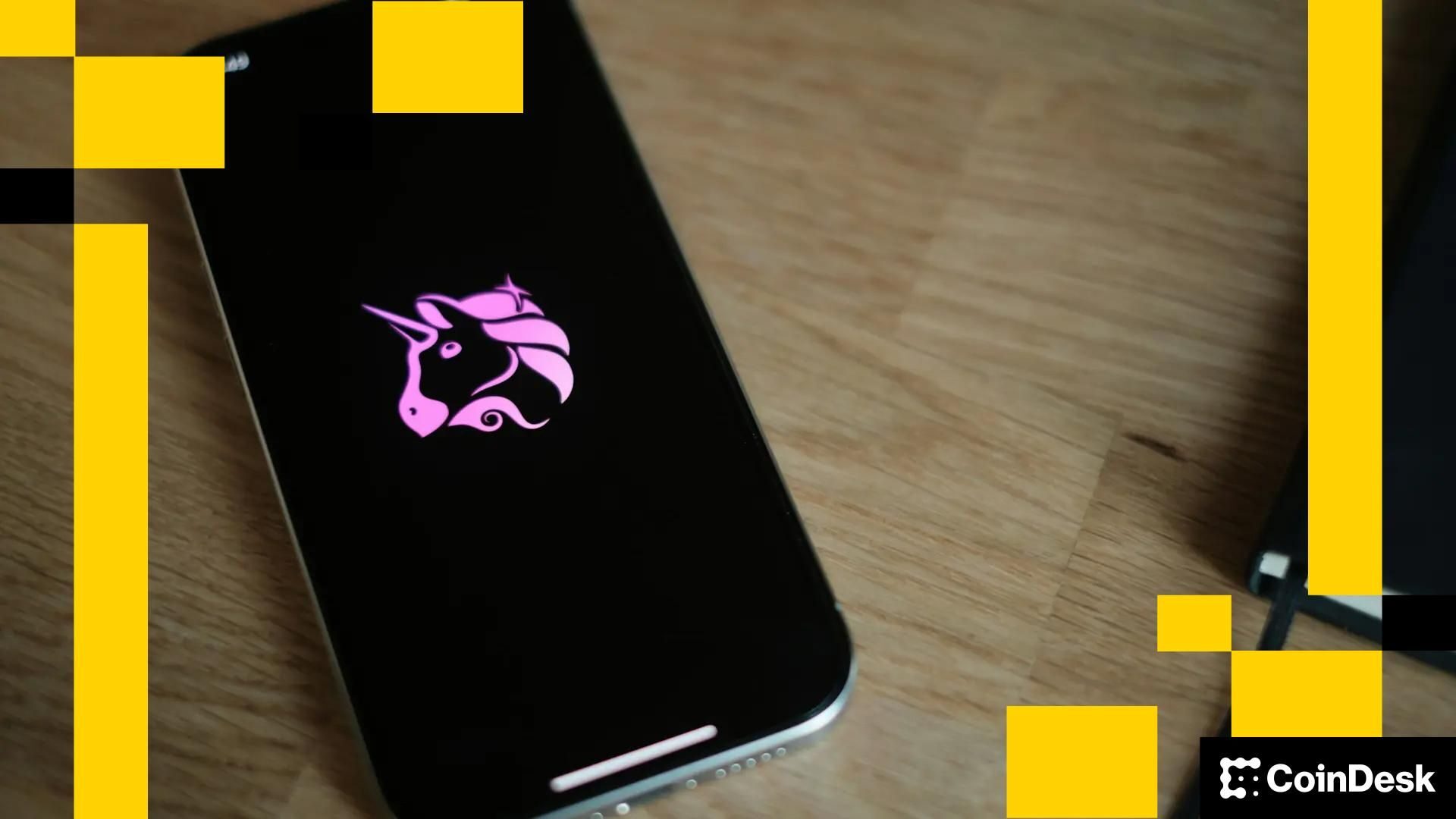
Uniswap vote could soon tie UNI token value to its multibillion-dollar trading engine

-
News
-
Video
-
Consensus 2026
-
Data & Indices
The proposal would also execute an immediate burn of 100 million UNI from the treasury, worth over $500 million at current rates.
By Shaurya Malwa|Edited by Stephen Alpher
Updated Dec 18, 2025, 12:54 p.m. Published Dec 18, 2025, 12:35 p.m.

- Uniswap governance is voting on a proposal to activate protocol fees and introduce a UNI token burn mechanism.
- The proposal would reduce UNI’s circulating supply by 100 million tokens and align Uniswap Labs with long-term growth.
- Voting on the proposal runs from December 20 to December 25 and includes a plan for a 20 million UNI annual growth budget.
Uniswap governance has opened voting on a sweeping proposal that would activate protocol fees for the first time, introduce a permanent burn mechanism for its UNI token and formally align Uniswap Labs with the protocol’s long-term growth strategy.
The proposal, dubbed “UNIfication,” would flip Uniswap’s long-dormant fee switch, allowing the protocol to collect a portion of swap fees across selected v2 and v3 pools. These pools have pocketed over $700 million in the past year, data shows.
STORY CONTINUES BELOW
Those fees would be routed into a new on-chain mechanism designed to burn UNI tokens, directly linking protocol usage to token supply reduction.
Voting begins at 9:03 a.m. UTC on December 20, 2025, and will continue until 11:27 p.m. on December 25, 2025.
If approved, the proposal would also execute an immediate burn of 100 million UNI from the treasury — worth over $500 million at current rates — in a retroactive move intended to reflect fees that could have accrued had protocol fees been active since Uniswap’s launch.
The burn would permanently reduce UNI’s circulating supply from the current 629 million tokens to 529 million tokens.
Under the plan, Uniswap v2 pools would split fees into 0.25% for liquidity providers and 0.05% for the protocol, while v3 protocol fees would be set on a pool-by-pool basis, initially capturing between one-sixth and one-quarter of LP fees depending on the tier.
Uniswap v2 and v3 are different versions of Uniswap’s trading software that launched years apart. V2 is one simple pool per token pair with one fixed fee, while v3 are more advanced pools that let market makers choose price ranges and different fee levels.
Liquidity providers are users who supply tokens to Uniswap so others can trade, earning a share of trading fees in return.
Beyond swap fees, the proposal directs all Unichain sequencer revenue — net of data costs and Optimism’s share — into the same UNI burn system, expanding the protocol’s fee base beyond Ethereum mainnet trading.
Another central part of the proposal is structural. It shifts operational responsibility from the Uniswap Foundation to Uniswap Labs, consolidating protocol development, growth, ecosystem support and governance coordination under a single entity.
In return, Labs commits to zero fees on its interface, wallet and API products and to focusing exclusively on protocol growth rather than standalone monetization.
To fund that effort, governance would approve a 20 million UNI annual growth budget, distributed quarterly via vesting starting in 2026. The budget would be governed by a services agreement between Labs and the DAO’s legal entity, DUNI.
Meanwhile, the proposal also sketches out future upgrades, including ways to capture value from trading bots, route trades beyond Uniswap’s own pools, and boost returns for liquidity providers.
If passed, the proposal would mark Uniswap’s most significant economic shift to date, transforming UNI from a governance token into one directly tied to protocol revenue and usage.
More For You
Nov 14, 2025

What to know:
- As of October 2025, GoPlus has generated $4.7M in total revenue across its product lines. The GoPlus App is the primary revenue driver, contributing $2.5M (approx. 53%), followed by the SafeToken Protocol at $1.7M.
- GoPlus Intelligence’s Token Security API averaged 717 million monthly calls year-to-date in 2025 , with a peak of nearly 1 billion calls in February 2025. Total blockchain-level requests, including transaction simulations, averaged an additional 350 million per month.
- Since its January 2025 launch , the $GPS token has registered over $5B in total spot volume and $10B in derivatives volume in 2025. Monthly spot volume peaked in March 2025 at over $1.1B , while derivatives volume peaked the same month at over $4B.
More For You
By Shaurya Malwa, CD Analytics
15 minutes ago
Despite increased whale accumulation, both DOGE and SHIB face selling pressure unless they reclaim key technical levels.
What to know:
- Dogecoin and Shiba Inu continue to underperform compared to broader crypto markets, highlighting ongoing de-risking in speculative assets.
- Despite increased whale accumulation, both DOGE and SHIB face selling pressure unless they reclaim key technical levels.
- Recent regulatory developments for SHIB have not translated into immediate price gains, as technical factors dominate meme coin trading.


-
Back to menu
-
Back to menu
Prices
-
Back to menu
-
Back to menu
Indices -
Back to menu
Research
-
Back to menu
Consensus 2026 -
Back to menu
Sponsored
-
Back to menu
-
Back to menu
Podcasts -
Back to menu
-
Back to menu
Webinars
Select Language