Banks have stopped asking if stablecoins belong in finance, now they’re considering how
How big banks plan to capture a quadrillion-dollar market

  • News

  • Video

  • Research

  • Events

  • Data & Indices

Finance

Financial institutions are racing to become the secure gateways for stablecoins as digital asset volume is projected to explode by 2030.

By Olivier Acuna|Edited by Sheldon Reback

Jul 5, 2026, 2:00 p.m.

3min read

Share this article

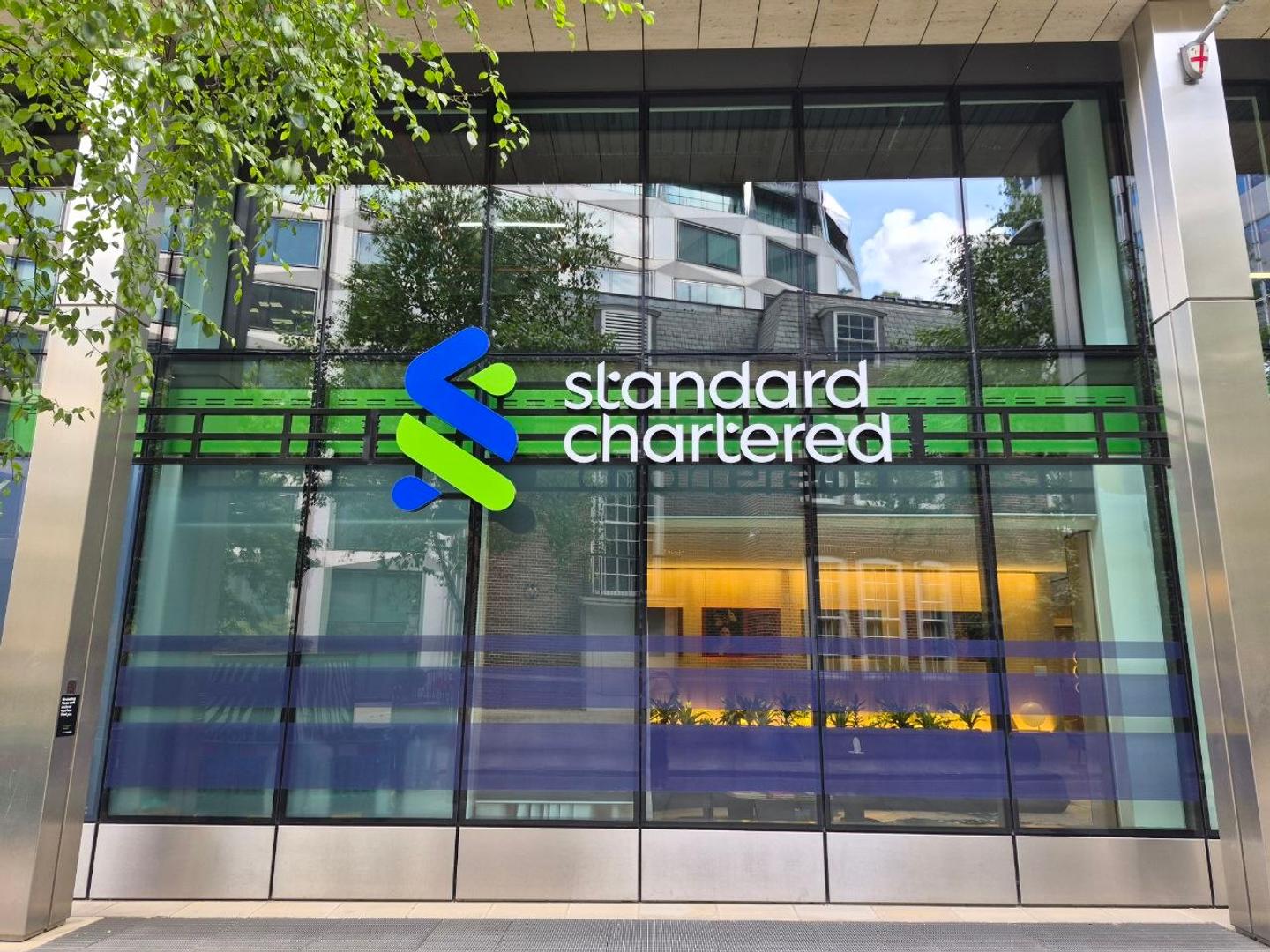
Standard Chartered London Office. (Olivier Acuna/CoinDesk)

Summary

When Standard Chartered (STAN) said it would offer institutional clients direct access to minting and redeeming Circle Internet’s (CRCL) USDC this week, it wasn’t simply adding another digital asset service.

Rather, it was joining a growing list of global financial institutions building product offerings around stablecoins, the fiat-pegged tokens that were once retail investors’ refuge from crypto-market volatility and are increasingly becoming part of the plumbing of financial institutions worldwide. Chainalysis estimates stablecoin settlement volumes could reach a quadrillion dollars a year by 2030.

Standard Chartered’s announcement came just days after BNY, the world’s largest custody bank, expanded its support for USDC by allowing institutional clients to custody, mint and redeem the stablecoin using its infrastructure rather than building their own. Both Standard Chartered and BNY, which has $59 trillion in assets under management, are considered global systemically important banks by the Bank for International Settlements’ Basel Committee.

Their decisions reflect a pattern among some lenders toward using established stablecoin networks rather than creating their own. The moves also suggest the conversation inside banking has shifted. The question is no longer whether stablecoins belong in finance, but how banks fit into the networks forming around them.

“Banks aren’t asking whether they’ll use stablecoins anymore. They’re deciding how they’ll use them,” said Andrew MacKenzie, the founder and CEO of Scotland-based stablecoin issuer Agant, in an interview.

The discussion intensified this week after Circle CEO Jeremy Allaire responded to the introduction of OpenUSD, a rival stablecoin backed by companies including Coinbase (COIN), payments company Stripe and asset manager BlackRock (BLK). Allaire said USDC’s position rests on nearly a decade of building liquidity, banking relationships and regulatory approvals.

Adrian Cachinero Vasiljevic, a co-founder and partner at Steakhouse Financial, which advises institutions on decentralized finance, agrees that the surrounding ecosystem is key.

“The network is what creates the value,” he said in an interview. “The stablecoin itself becomes almost secondary.

Read more: Circle’s USDC Overtakes Tether’s USDT in Onchain Activity as Regulation Drives Shift: JPMorgan

Even so, new stablecoins continue to appear, especially in Europe where there’s less of an established network and there’s concern about the preponderance of dollar-pegged tokens, which account for more than 99% of the total stablecoin market cap.

Jan-Oliver Sell, CEO of Qivalis, a group of 37 European financial institutions developing the Euro On-Chain (EUOC) stablecoin, noted that Europe already has regulatory oversight under the Markets in Crypto-Assets (MiCA) framework. What it lacks is enough euro-denominated liquidity to keep settlement activity from migrating to dollar-backed stablecoins.

“If we don’t have a euro on the blockchain, the banks will use the dollar because it’s there, it’s available and it has a lot of liquidity,” Sell told CoinDesk. Rather than each bank issuing its own euro stablecoin, Qivalis is encouraging them to work together in a single shared network.

Sell said Qivalis is not trying to compete directly with USDC. Its goal is to give European banks, businesses and payment firms a regulated euro alternative as tokenized finance expands. That would allow institutions to settle in euros rather than converting assets into dollars and back again.

As more banks join, the consortium also benefits from the same network effects driving USDC’s adoption. “The more banks we have in the consortium, the better. Our network has stronger network effects,” Sell said.

Agant’s MacKenzie said he sees the same trend emerging in the U.K.

Banks are no longer focused only on digital assets, he said. Instead, they are investing in the infrastructure needed to connect stablecoins with traditional finance for payments, treasury operations and settlement. Businesses generally prefer settling obligations in their own currencies, he said, rather than converting into U.S. dollars first.

That may be the impetus for introducing non-dollar stablecoins, such as Societe Generale’s EUR CoinVertible (EURCV), Credit Agricole’s EURXT and Qivalis’ impending offering. But existing is insufficient. It’s how the bank deploys the stablecoin to its customers that will determine its success.

“Anybody can issue a stablecoin,” said Steakhouse Financial’s Cachinero Vasiljevic. “But if nobody uses the stablecoin, the stablecoin is worthless. The value of the stablecoin is the network.”

By CoinDesk Research

Jun 30, 2026

Zcash’s Tachyon upgrade aims to scale shielded payments, improve quantum readiness, and test whether its funding, security, and governance can hold.

Why it matters:

Zcash’s Tachyon upgrade aims to scale shielded payments, improve quantum readiness, and test whether its funding, security, and governance can hold.


Leave a Reply

Your email address will not be published. Required fields are marked *