
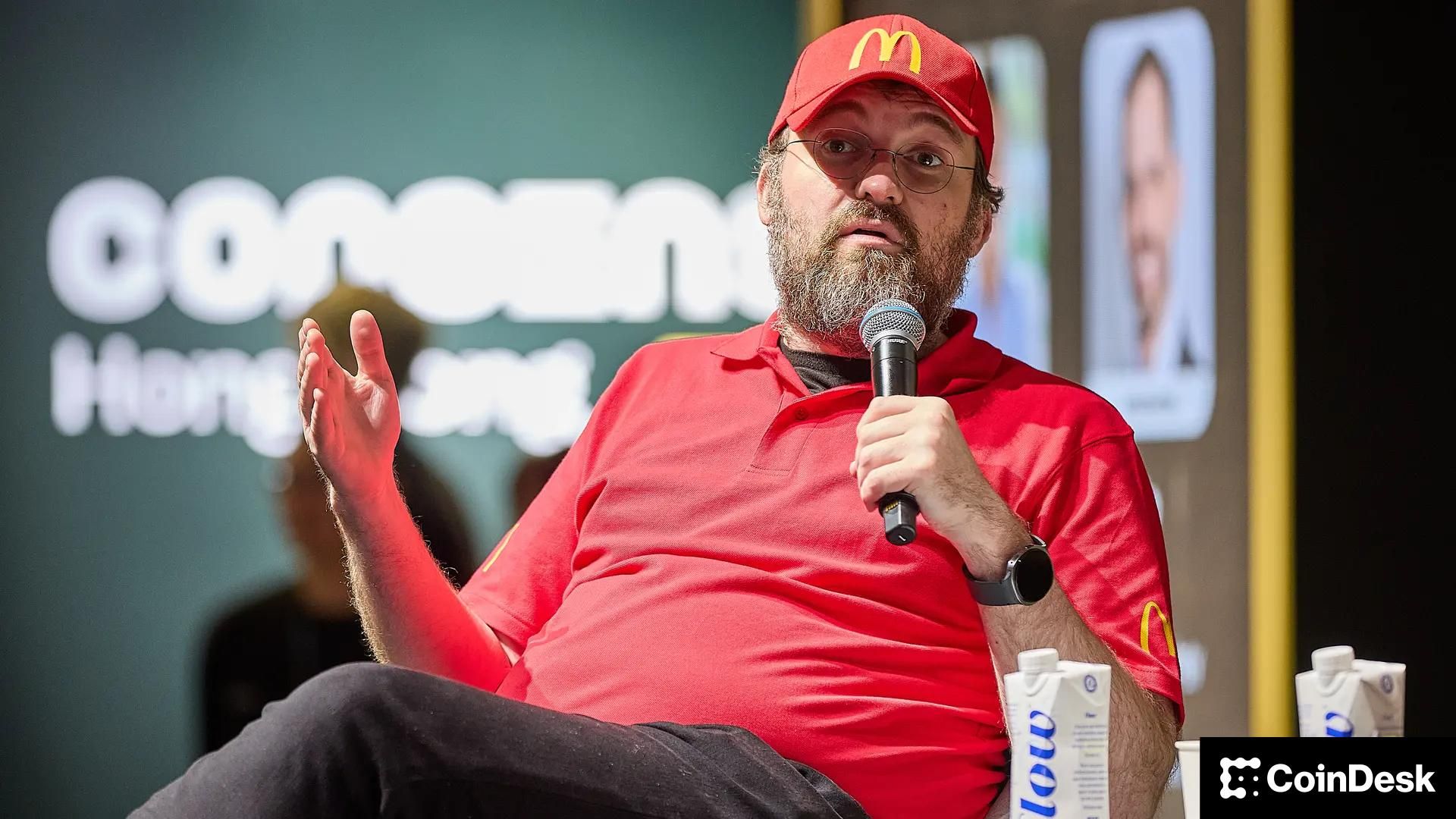
Cardano hands core software over to outside developers to achieve full decentralization
Input Output will transfer control of the Haskell node, Plutus, Hydra and other components as founder Charles Hoskinson says the network must change and start growing again.
By Olivier Acuna|Edited by Oliver Knight
Jul 17, 2026, 4:23 p.m.
Share this article

Summary
Cardano developer Input Output is handing control of core blockchain infrastructure to outside teams, reducing the network’s dependence on the company that built it, Input Output announced Friday.
Input Output said the handover is the next phase of Cardano’s decentralization. It covers Cardano’s Haskell node, Plutus smart-contract platform, Daedalus wallet, Hydra scaling technology and developer relations.
Specialist companies include Se7en Labs, a development agency specializing in Solana blockchain infrastructure, and Teragone, a specialist software development and cryptographic research team that leads the development of Mithril, a stake-based signature protocol for the Cardano blockchain. Both will take responsibility for some of the components. The handover will begin in August and continue into 2027.
Cardano has already moved protocol decisions and governance to its community. Input Output said the next step is to spread responsibility for developing and maintaining the software.
“The last stage of the Voltaire era is full decentralization of node and reference blueprint development,” Input Output CEO and Cardano founder Charles Hoskinson said in the statement.
The plan calls for independent teams to maintain at least three Cardano implementations written in Haskell, Rust and Go. Member organizations including Intersect and Pragma will oversee formal specifications, with development subject to community review and voting.
Input Output will focus more of its work on research and new ventures through IO Labs and IO Ventures.
The announcement comes as Cardano faces weak network activity, with just $70 million in TVL compared to rival chains like Tron and Solana that boast more than $4 billion respectively. There has also been a sharp decline in the value of its native token. ADA was trading at about 16 cents Friday, almost 95% below its September 2021 record of $3.10.
Hoskinson recently acknowledged the problems facing the network and said further setbacks would be part of its development. The Cardano founder said he had warned earlier this year that the deteriorating market conditions would see many projects shuttering.
“Even Cardano has to go through growing pains that are very uncomfortable,” he said in a video. “Bones have to be broken. Growth spurts have to happen. Exits and entrances. Failures have to occur to build confidence in the system.”
Hoskinson said Cardano needs more specialized teams to set targets and direct resources. He also acknowledged that the network has stopped expanding.
Moving core development to several companies could reduce Cardano’s reliance on Input Output, the statement on Friday said. It will also test whether independent teams can maintain the software without slowing development or creating coordination problems.
“I’m extremely proud that we have arrived at the final stage with IO Labs spinning out the Haskell node to community curation and control,” Hoskinson said. “Our partners are ready and the ecosystem now has many diverse options.”

- 1
- 2
- 3
- 4
- 5
- 6
- 7
- 8
- 9
- 10


CEX trading volumes rose for the first time in five months in June, with spot climbing 15.3% to $1.11T and RWA perpetual volumes surging to a record $311B.
Jul 13, 2026
CEX trading volumes rose for the first time in five months in June, with spot climbing 15.3% to $1.11T and RWA perpetual volumes surging to a record $311B.
Why it matters:
CEX trading volumes rose for the first time in five months in June, with spot climbing 15.3% to $1.11T and RWA perpetual volumes surging to a record $311B.