
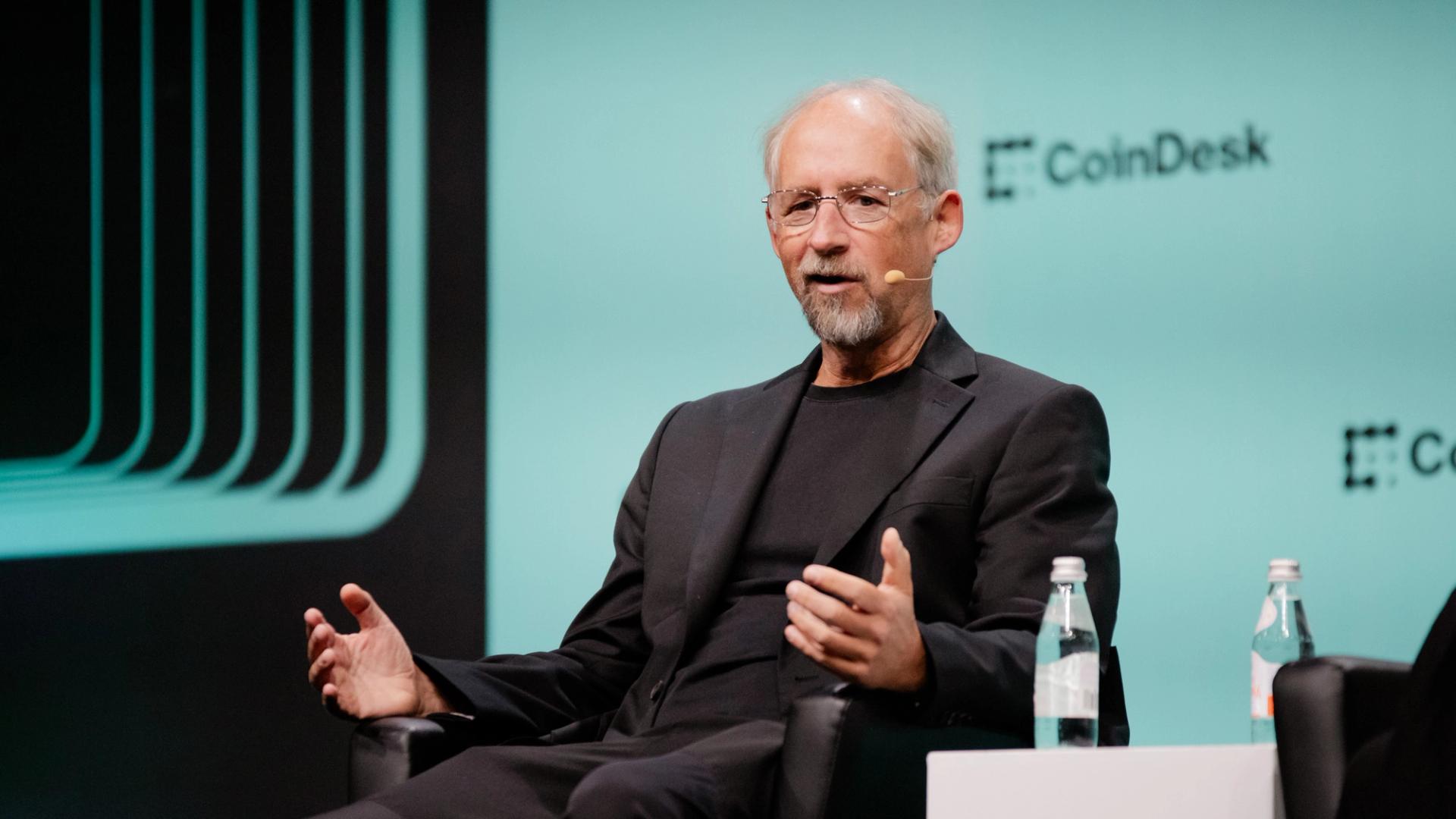
Safety first: Why Adam Back says Bitcoin is winning the ‘DeFi security war’
Share this article
The Blockstream CEO told Consensus Miami 2026 that sovereigns, pension funds and treasury companies will join the next wave of bitcoin adoption.
By Jamie Crawley, AI Boost|Edited by Sam Reynolds
May 7, 2026, 10:23 a.m. 2 min read

- Adam Back said recent DeFi exploits are reinforcing institutional preference for Bitcoin’s simpler, security-focused infrastructure.
- He argued Bitcoin layer-2 systems could support tokenization and decentralized finance without sacrificing Bitcoin’s conservative design philosophy.
- Back said the next major adoption wave will come through institutional portfolio allocations, sovereign entities and pension funds gaining bitcoin exposure.
Blockstream CEO Adam Back said recent decentralized finance (DeFi) exploits are strengthening Bitcoin’s appeal among institutions seeking secure, politically neutral financial infrastructure, while also opening the door for more conservative forms of tokenization and decentralized finance built on Bitcoin rails.
Speaking at Consensus Miami 2026, the longtime cryptographer and early Bitcoin contributor argued that the Bitcoin blockchain’s comparatively simple architecture is increasingly separating it from more experimental blockchain ecosystems that have suffered repeated smart-contract failures and security breaches.
“Bitcoin infrastructure is much more simple, robust, security first,” Back said.
Back said institutional investors have become significantly more sophisticated in understanding crypto risk, particularly after a string of DeFi exploits this year.
Rather than trying to reshape Bitcoin into traditional finance infrastructure, he said many institutions are instead adapting themselves to Bitcoin’s incentive structure and conservative security model.
That dynamic, he argued, could create opportunities for Bitcoin-native tokenization and decentralized finance systems that prioritize safety over rapid experimentation.
Back pointed to Blockstream’s Liquid Network as an example of how Bitcoin-based infrastructure can support tokenization, trustless trading and smart-contract functionality while maintaining a more conservative design approach than virtual-machine-based chains.
“You have basically a hardware wallet to hardware wallet trade,” Back said, describing tokenized asset trading on Liquid. “That’s arguably the most secure trading platform or trading mechanism available.”
From there, Back shifted to what he described as Bitcoin’s next major adoption phase: institutional portfolio allocation.
He outlined Bitcoin adoption as occurring in three waves — first direct retail ownership, then spot ETF access through brokerages and advisers, and now institutional allocation through managed portfolios, pension funds and sovereign entities.
“The model portfolios that BlackRock and others are putting out…those allocations haven’t taken effect yet,” he said.
Back also pointed to the rapid growth of bitcoin treasury companies following Strategy’s balance-sheet playbook, estimating roughly 200 such firms now exist globally. Among them is BSTR, a bitcoin treasury company Back leads as CEO, which he described as a more actively managed approach to bitcoin exposure.
Unlike many treasury firms focused primarily on passive accumulation, Back said BSTR intends to generate returns using both bitcoin holdings and fund-management strategies.
AI Disclaimer: Parts of this article were generated with the assistance from AI tools and reviewed by our editorial team to ensure accuracy and adherence to our standards. For more information, see CoinDesk’s full AI Policy.
More For You
By Jeffrey Albus|Edited by Nikhilesh De
12 hours ago

Alex Pruden said the asymmetry between acting on a post-quantum signature scheme today and waiting for certainty about quantum-computing hardware timelines means Bitcoin developers should move from research into production.
What to know:
- Project Eleven CEO Alex Pruden told CoinDesk’s Consensus Miami conference Wednesday that Bitcoin’s developer community should move from research into production on a post-quantum signature option rather than waiting for certainty about quantum-computer timelines.
- He said the migration will be substantially harder than Taproot, which took roughly five years and…


