The stablecoin yield clash that won’t go away has banks, crypto battling over tradition
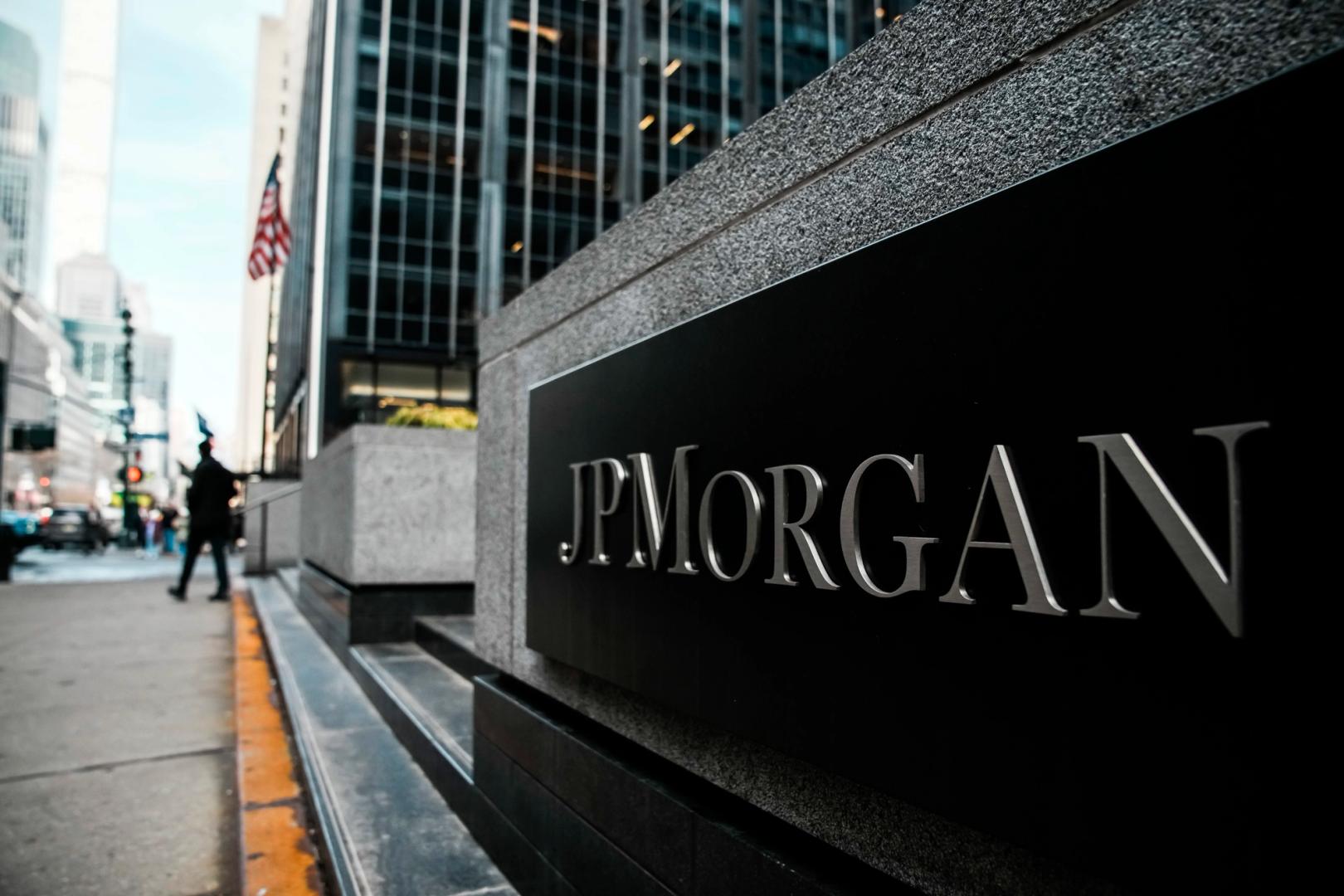
The bankers want people kept in lower-yield deposits for the good of the financial system as it’s existed for generations, and their argument is gaining ground.
By Jesse Hamilton|Edited by Nikhilesh De
Share this article

Summary
You earn a very small amount of interest when you let banks hang onto your money, and bankers contend that letting crypto platforms pay you more just for holding stablecoins would throw the U.S. economy into danger.
That argument may have contributed to fatally derailing the Senate’s Digital Asset Market Clarity Act. Even after a high-profile bipartisan compromise months back, bank lobbyists pushed their worries back into the forefront earlier this month, just in time to help knock over the already teetering legislation. Still, the destiny of U.S. stablecoin yield isn’t yet resolved.
While the bill’s section that goes after President Donald Trump’s personal business ties to crypto has drawn the most fervent attention, the Clarity Act’s revisions on stablecoin yield were what threw the bill off course early this year, and the banks haven’t stopped arguing that crypto firms may try to offer stablecoin rewards that imitate interest on bank deposits and by extension threaten the role of banks and imperil U.S. lending.
The battle is likely to be finished one way or another next month, when the Clarity Act gets its final three weeks of Senate action before the midterm elections, and the stakes will test the old-guard strength of bank lobbyists against the high-spending political powers of crypto advocates.
The banks have made an appeal that what they’re doing represents the public good: Their business model requires that people keep their money in deposits, which don’t pay enough interest to compete with what crypto firms would pay in stablecoin yield, if given the chance. People can’t be allowed to make money off their holdings of stablecoins, the banks contend, because if customers abandon low-interest bank deposits, the institutions won’t be able to reuse their money to support bank lending.
One of their standard bearers, JPMorgan Chase & Co. CEO Jamie Dimon, says banks aren’t being treated fairly, contending that stablecoins don’t carry the same government scrutiny, regulations and requirements to track the identity of users.
“It should be fair and equal, period,” Dimon, whose bank is the largest in the U.S., said in a June Fox Business interview, saying the Clarity Act had “almost no legal protections” to prevent money laundering and other illicit finance.
“The banks will not accept it that way,” he said. “We’ll fight it. If we lose, we lose.”
Stablecoins were designed as the private-sector equivalent of a digital dollar. Some of them — most notably the global leader, Tether’s USDT — exist outside of the direct supervision of national regulators. But last year’s Guiding and Establishing National Innovation for U.S. Stablecoins (GENIUS) Act formally established the U.S. rules for stablecoin issuers, making these assets a formal component of the U.S. financial system.
The GENIUS Act is the current law of the land on stablecoins, and the crypto industry contends that it allows their businesses to offer the full range of stablecoin rewards that their banking adversaries seem to fear. So the bank lobbyists have been pressing for the Clarity Act to overhaul the year-old GENIUS on several points about stablecoin rewards, and though they won a number of concessions, their continued fight may contribute to the bill’s failure if it doesn’t manage to find 60 Senate supporters by mid-September.
So if they kill Clarity, they may be stuck with the status quo of GENIUS. While the new law bans stablecoin issuers from offering yield to holders, it’s less explicitly restrictive on what the exchanges that handle customers’ stablecoin transactions can do. However, when the regulators eventually turn the law into rules, whatever they decide about “anti-evasion language, particularly as it relates to indirect yield such as distribution-fee arrangements, will determine how much daylight exists for issuer-affiliated rewards programs,” the American Bankers Association wrote in an opinion on its website.
“Concern that these rules will not go far enough is exactly why ABA is calling on Congress to tighten the language around stablecoin rewards in the Clarity Act,” it said.
Many crypto lobbyists in Washington insist that the stablecoin rewards matter is “locked” in the legislation and won’t be further revised.
“Simply put, this matter has already been dealt with,” said Rashan Colbert, director of U.S. policy at the Crypto Council for Innovation.
The industry’s view that the debate is over doesn’t seem to grant that several Republican members of the Senate have split from their party to warn that they may oppose Clarity without more bank-friendly adjustments. At this point, the bill may not even be able to win a majority vote, let alone the 60 yesses it needs.
How did things get here?
The banks used to offer interest rates on deposits that were generally above inflation, meaning savings accounts and products like certificates of deposit could grow meaningfully over time. But the rates have slipped into near nonexistence, even as inflation has risen in recent years. A standard savings account in the retail banking arm of JPMorgan Chase & Co. offers 0.01%. Twenty years ago, that same Chase savings account paid more than 4%.
With a current inflation rate of 3.4% cutting away at the dollar’s strength, even the much higher interest rate of about 3.25% on Chase bank’s 4-month certificates of deposit — which requires locking up funds for several months — is below inflation, meaning the spending power of the savings will shrink over time.
The best stablecoin yield rates at exchanges such as Kraken and Gemini are at 3.75% and above for participants of certain programs, and it’s at about 3.5% at the biggest U.S. exchange, Coinbase. For their part, a person representing the banking side who declined to be named argued to CoinDesk that — if one factors in the Federal Reserve’s fund rate being significantly higher 20 years ago and other current interest expenses — the industry is paying more overall in interest than it did back then.
Still, bankers contend that the crypto platforms’ reward offers are going to siphon off a huge chunk of depositors.
The banks haven’t responded to the threat of stablecoin competition by raising their payouts. Bankers say their businesses face a range of intensive regulatory demands, including capital requirements, liquidity minimums and the maintenance of deposit insurance, so it’s not equitable to compare the amounts they can offer on interest with those advertised by their emerging digital rivals. Stablecoin issuers, the bankers say, are more akin to money-market fund managers.
As the interest offered by bank savings accounts has dwindled, however, banking profits remain robust. The first quarter of 2026 showed an industrywide profit at a record $80.5 billion, according to the Federal Deposit Insurance Corp.’s quarterly banking profile that’s a snapshot of the industry’s health. And its key return-on-assets rate was at 1.26%, which is among the highest levels in recent years.
Colbert countered the claim that bank customers will shift to stablecoins, noting: “This has not been found to be true, or even suggested by current stablecoin activity.”
Despite the rapid rise in stablecoin market cap to more than $300 billion, deposits are still flowing into the banks, jumping by nearly $400 billion in the most recently reported quarter, marking the seventh consecutive quarterly increase. U.S. banks have almost $21 trillion in deposits, according to FDIC data.
Bank deposits and stablecoin holdings are actually wildly different. Deposits are money left with a bank with the understanding that the bank will use it to make more money, and the amount is generally insured by a federal government program that guarantees the depositor won’t lose anything. Stablecoins, under last year’s new law, are backed 100% by reliable reserves, and those reserves can’t be used for anything else — leaving little point for a complex federal insurance program.
Still, the banking insider argued that the large stablecoin issuers aren’t impervious to major outside risks, such as runs and attacks from hackers, so they need to be regulated as such.
The current text of the Clarity Act insists that crypto platforms can’t offer stablecoin programs that look anything like deposit interest. Holders of stablecoins can’t be rewarded just for letting them sit, according to the bill, though it still leaves an opening for rewards programs based on using the tokens, akin to credit-card incentives. Despite this compromise worked out between a Republican and a Democrat lawmaker, bankers contend that it still doesn’t protect their core product.
Banks assert that without their traditional base of deposits, it’ll be harder and more expensive for them to extend loans for people to buy houses and run businesses. But in both of those segments of lending, the role of banks has been rapidly falling away.
Mortgage origination — meaning the initial lending of money to buy a home — was once dominated by banks, but outside competitors such as Rocket Mortgage rose in the past couple of decades to take more than two thirds of that market. And in business lending, the industry has also steadily given ground to “non-bank” lenders, including entities such as hedge funds, finance companies and business development companies, until banks’ lending represents a much smaller fraction of business debt in the U.S., according to the sector’s own data.
However, the major thrust of bank lobbying on the Clarity Act has been to suggest Main Street community bankers won’t be able to extend mortgages and business loans if their depositors flee.
“When crypto gets a free pass, communities pay the price,” according to a recent ad backed by the Independent Community Bankers of America, pitting community banks against the crypto industry.
That argument soured some lawmakers on the bill.
“My state right now — agriculture folks, local community people — are very, very worried about the effect on community banks,” Senator Josh Hawley, a Missouri Republican, told Politico earlier this month. “They are blowing me up over it.
One recently established crypto advocacy group, the Digital Sovereignty Alliance, argues that the industry may want to give ground to the banks if it means better odds for Clarity.
“There are some battles worth fighting for innovation, and there are some battles that are better ceded to build a durable regulatory framework,” Managing Director Adrian Wall said in a statement to CoinDesk. “If resolving the yield question is what it takes to bring the banking sector into a broader consensus on market structure, that is a trade worth making.”
- 1
- 2
- 3
- 4
- 5
- 6
- 7
- 8
- 9
- 10
Zcash’s Tachyon upgrade aims to scale shielded payments, improve quantum readiness, and test whether its funding, security, and governance can hold.
Jun 30, 2026
Zcash’s Tachyon upgrade aims to scale shielded payments, improve quantum readiness, and test whether its funding, security, and governance can hold.
Why it matters:
Zcash’s Tachyon upgrade aims to scale shielded payments, improve quantum readiness, and test whether its funding, security, and governance can hold.