
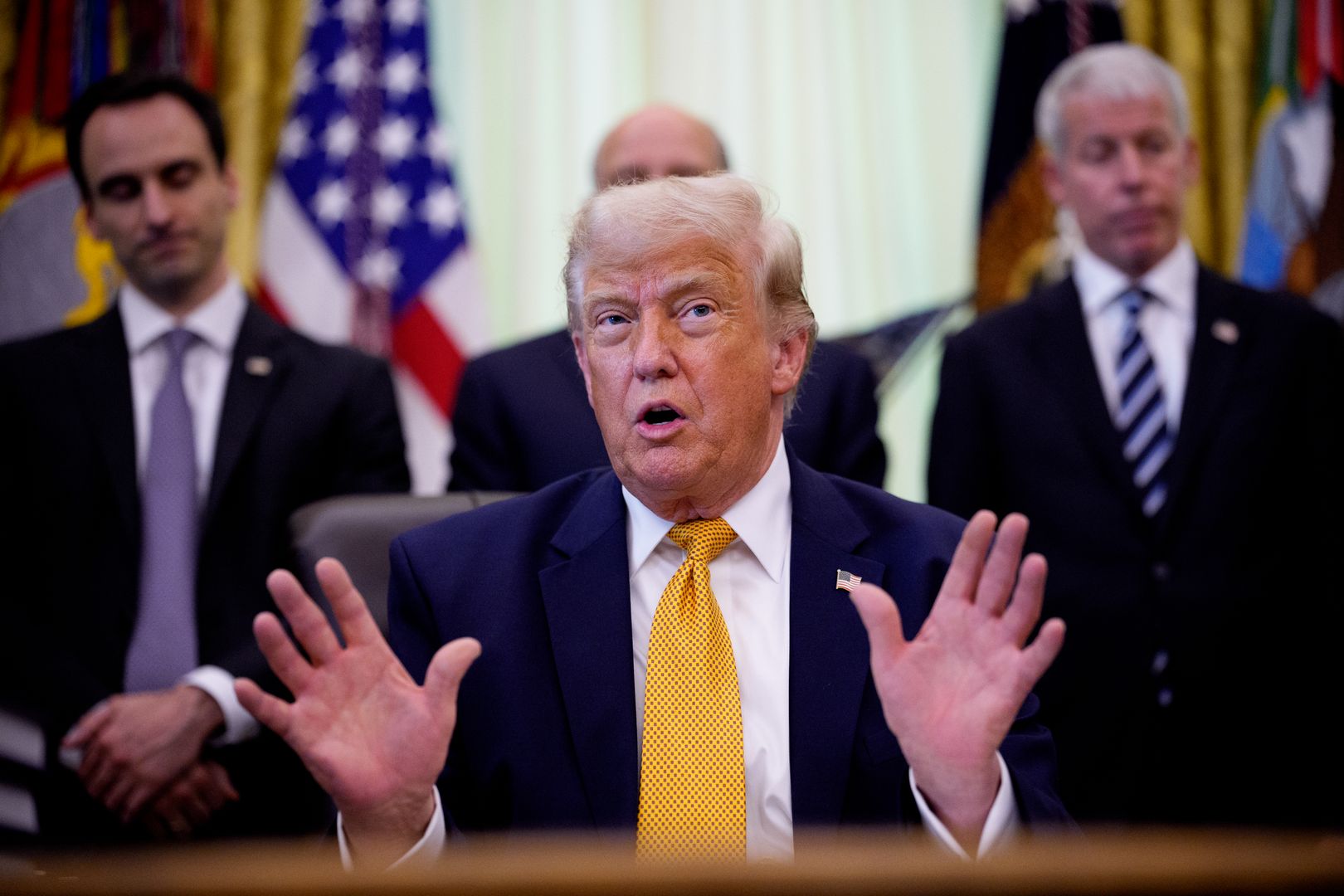
Trump refuses to sign law with U.S. CBDC ban, demands approval of elections bill
As Congress prepared to celebrate the president’s signing of the bipartisan housing bill that contains a CBDC prohibition, Trump abruptly cancelled the event.
By Jesse Hamilton|Edited by Cheyenne Ligon
Updated Jun 24, 2026, 4:10 p.m. Published Jun 24, 2026, 3:42 p.m.
Share this article

Summary
U.S. President Donald Trump has refused to sign a law that includes a four-year ban on central bank digital currencies, which was part of Congress’ housing affordability bill, until he gets unrelated legislation passed that would demand proof of citizenship from voters.
Trump had a signing ceremony planned for Wednesday, but he said in a post on Truth Social that it’s “hereby cancelled until such time as we pass the desperately needed SAVE AMERICA ACT, which I consider to be a National Emergency.” But a domino effect of that position could also endanger the timing of the crypto industry’s more urgent policy effort for its market structure bill.
The legislation Trump is demanding carries a number of contentious federal voting policies to require citizenship proof and identification from voters, though Republican leaders have reportedly hit a wall on support for the bill. The president had made a threat earlier this year to block all other legislation until the SAVE America Act lands on his desk, though until Wednesday morning, he’d been planning on the signing of the major effort to address the affordability of homes in the U.S.
The voter-ID effort “has been stuck in the Senate,” Speaker of the House Mike Johnson told reporters, saying the bill needs to be put into another budget bill. “So that’s what we’re going to do.”
Jeopardizing the existing housing bill could represent a heavy blow to Congress, in which both parties had embraced the affordability effort, and it’s also a potential setback to the anti-CBDC forces. While the U.S. wasn’t poised to issue a CBDC any time soon, the idea to ban such a digital dollar was strongly supported by a crypto industry looking forward to the bill’s four-year prohibition that extends to the end of 2030.
Republican politicians have argued that a digital dollar managed by the Federal Reserve could be used to spy on the finances of citizens. And Trump signed an executive order last year banning any U.S. moves toward a CBDC, which he argued would “threaten the stability of the financial system, individual privacy, and the sovereignty of the United States.”
But if Trump delays Congress with this latest dispute, that could also have dangerous timing implications for the Digital Asset Market Clarity Act — the crypto industry’s central aim for the dwindling congressional session. The Senate calendar only has about five weeks remaining before Congress’ summer break, giving the industry and its allies little time to iron out the remaining wrinkles in the crypto market structure bill and get it on the Senate floor for a vote. The process can’t afford any further significant delays if the Clarity Act is to become law in 2026.
If congressional Republicans pivot toward further work on the elections-focused legislation, that may squeeze their bandwidth for other legislation. GOP lawmakers were already pushing again for Senate action on Trump’s favored bill on Wednesday.
“There is no path for the SAVE Act becoming law,” said Jaret Seiberg, a policy analyst at TD Cowen, in a Wednesday research note. “Senate GOP would need to eliminate the filibuster, a step they already have rejected. Even absent the filibuster, it is not clear the bill has the support of 50 senators, given worries about have to prove citizenship.”
Before his cancellation of the housing bill signing, Trump had posted on his social-media platform that the housing bill is of “minor importance compared to lower interest rates” and other congressional priorities, and he criticized the involvement of Democratic Senator Elizabeth Warren.
The president has a constitutionally designated 10-day window to weigh approved bills for signature once they land on his desk. If he were to veto it, the bill did pass with enough of a margin to reject that veto, though Republican allies of the president would have to agree to override his sentiment.
UPDATE (June 24, 2026, 16:01 UTC): Adds comment from TD Cowen.

- 1
- 2
- 3
SecondFi loses $2.4 million in Cardano wallet exploit
57 minutes ago
- 4
- 5
- 6
- 7
- 8
- 9
- 10


In May, combined exchange volumes fell 3.45% to $4.41T; the lowest since September 2024. RWA perpetual futures volumes rose 10.4% against the trend, hitting a new all-time high.
Jun 15, 2026
In May, combined exchange volumes fell 3.45% to $4.41T; the lowest since September 2024. RWA perpetual futures volumes rose 10.4% against the trend, hitting a new all-time high.
Why it matters:
In May, combined exchange volumes fell 3.45% to $4.41T; the lowest since September 2024. RWA perpetual futures volumes rose 10.4% against the trend, hitting a new all-time high.