
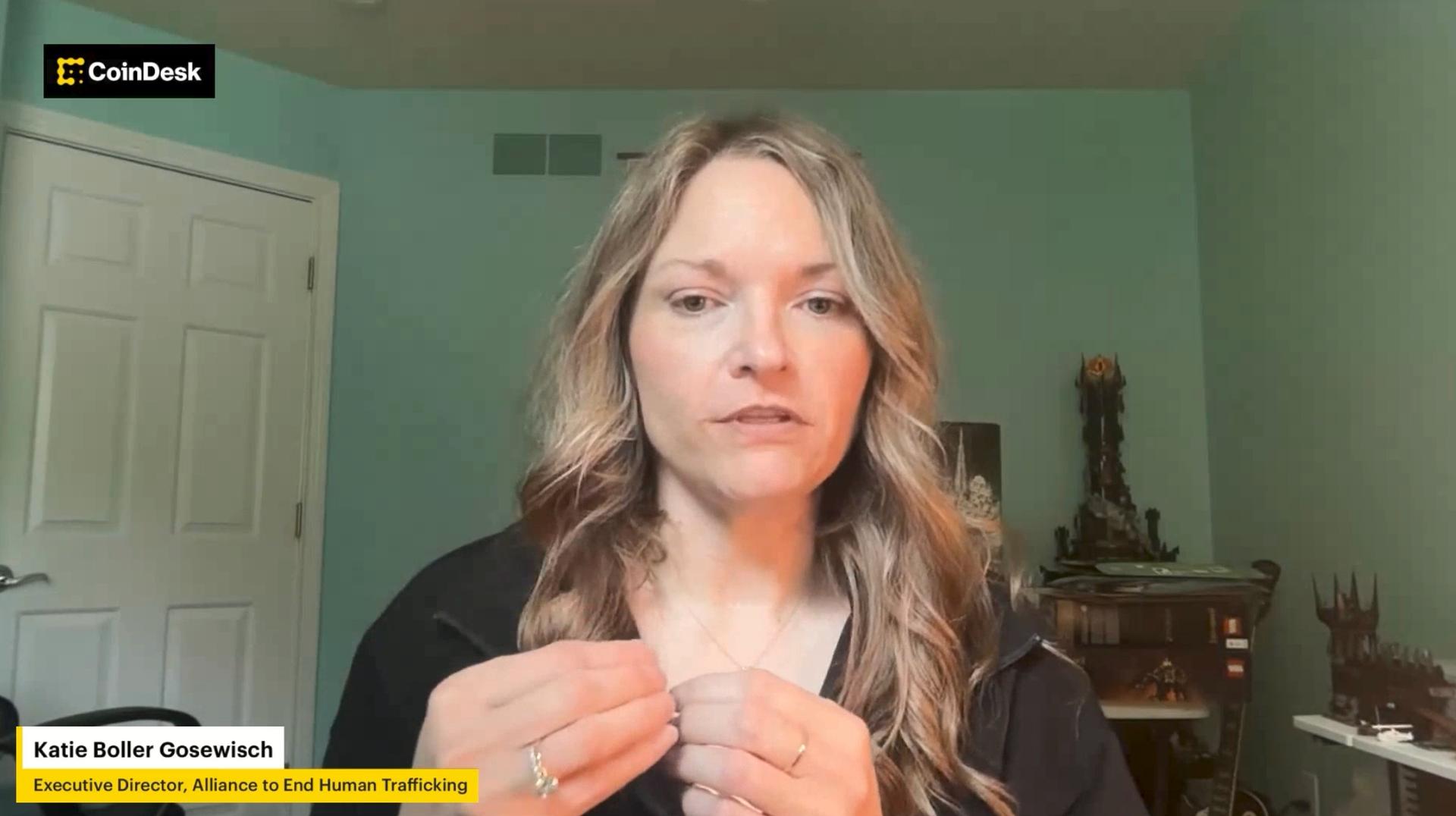
Anti-trafficking group says CLARITY Act’s Section 604 could weaken accountability
An anti-human trafficking advocate said a Clarity Act provision could weaken accountability despite existing criminal laws.
By AI Boost|Edited by Jennifer Sanasie
Jun 26, 2026, 6:24 p.m.
Share this article

Latest developments: The Alliance to End Human Trafficking is urging lawmakers to revisit Section 604 of the Clarity Act, arguing the provision could make it harder to hold some crypto platform developers accountable when their technology is used to facilitate human trafficking.
- Katie Boller Gosewisch, executive director of the Alliance to End Human Trafficking, said her organization’s primary concern is language stating that developers who do not control user funds are not money transmitters.
- Boller Gosewisch argued the provision could allow some third-party platform developers to “hide behind” a lack of liability if their software is used to facilitate trafficking-related payments.
- The Alliance and Catholic Charities recently sent a letter to Senate Majority Leader John Thune and Senate Minority Leader Chuck Schumer outlining their concerns with the legislation.
- Boller Gosewisch joined Rebecca Rettig and Renato Mariotti on CoinDesk’s The Policy Protocol.
The debate: Rettig argued Section 604 reflects longstanding U.S. anti-money laundering policy rather than creating a new legal shield.
- Rettig said the provision simply clarifies that developers who do not control customer assets are not considered money transmitters, consistent with existing Bank Secrecy Act and FinCEN guidance.
- She argued the bill preserves liability for parties that do control user funds and does not eliminate exposure under other criminal statutes.
- She also pointed to existing money laundering laws, including 18 U.S.C. § 1956, as tools prosecutors can use against developers who knowingly facilitate criminal activity.
Reading between the lines: The disagreement centers on whether lawmakers should regulate based on current technology or potential future abuses.
- Boller Gosewisch said sophisticated criminals could eventually use Section 604 to create reasonable doubt in criminal prosecutions, even if that is not lawmakers’ intent today.
- She acknowledged she is not an attorney but argued Congress should anticipate how bad actors may exploit statutory language over time.
- She compared the issue to civil litigation involving hotels, arguing entities may have a broader “duty of care” even if they do not directly participate in criminal conduct.
What comes next: Both sides agreed stronger enforcement against human trafficking remains important, even as they disagreed on the bill’s language.
- Boller Gosewisch said restoring a federal human trafficking coordinator and increasing financial crimes prosecutions focused on trafficking would be positive steps alongside legislative reforms.
- Rettig argued blockchain’s transparency has become an important investigative tool for law enforcement because transactions can often be traced on public ledgers.
- The broader debate over developer liability continues as lawmakers consider the Clarity Act and as courts weigh cases involving developers of decentralized crypto protocols.
AI Disclaimer: Parts of this article were generated with the assistance from AI tools and reviewed by our editorial team to ensure accuracy and adherence to our standards. For more information, see CoinDesk’s full AI Policy.

- 1
- 2
- 3
- 4
- 5
- 6
- 7
- 8
- 9
- 10


US equities on crypto rails: access is easy, on-chain composability is the real test. Only Binance and Backpack deliver both – and only Binance at scale.
8 hours ago
US equities on crypto rails: access is easy, on-chain composability is the real test. Only Binance and Backpack deliver both – and only Binance at scale.
Why it matters:
US equities on crypto rails: access is easy, on-chain composability is the real test. Only Binance and Backpack deliver both – and only Binance at scale.