
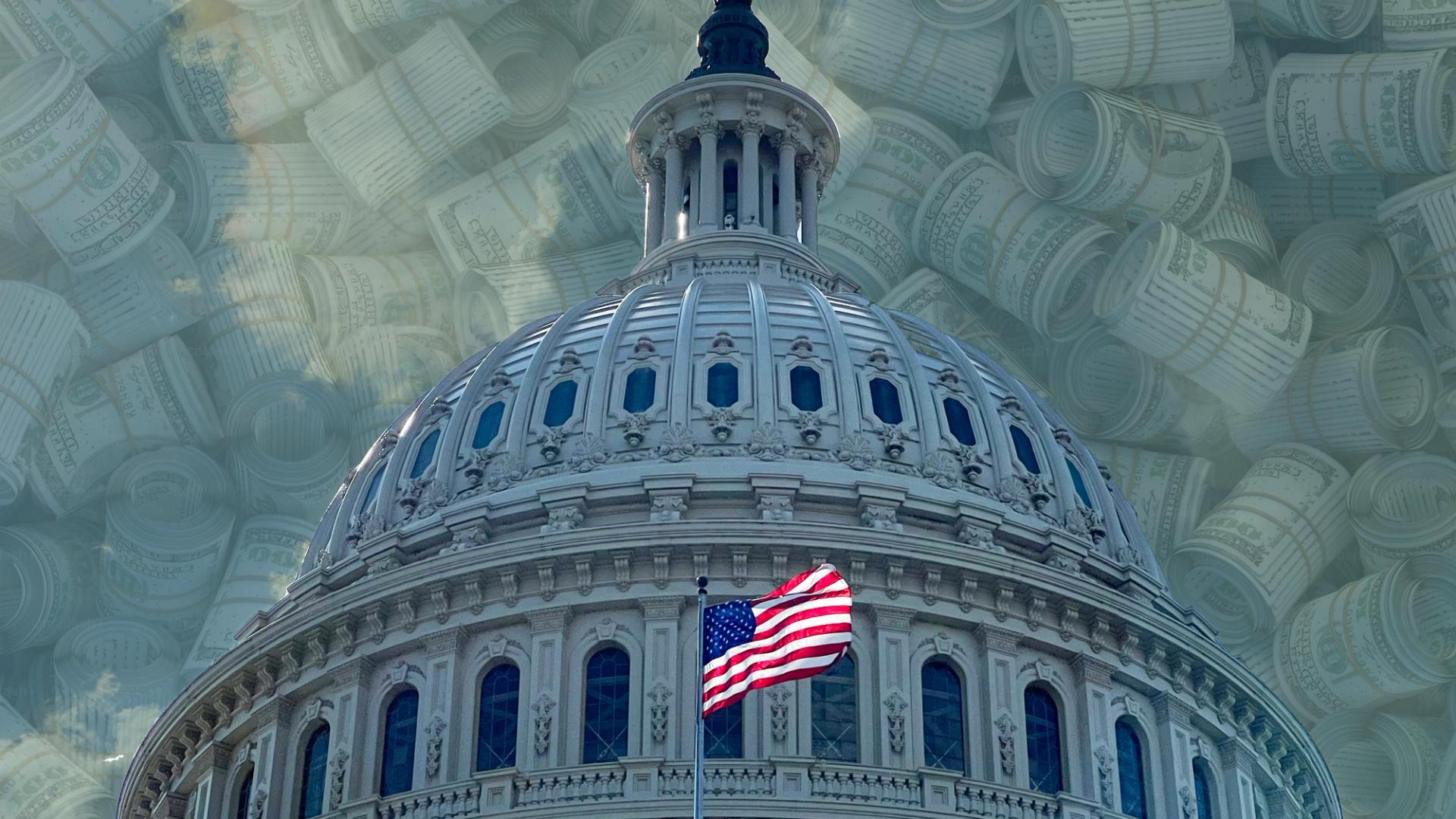
The U.S. cryptocurrency industry has flexed its campaign-finance might to help dethrone veteran incumbents and elevate new allies in Texas and other states as the congressional midterm season approaches full velocity, though the arrival of new political action committees may put the sector’s meticulous bipartisanship in question.
Fairshake is still an unrivaled channel for millions of old-fashioned U.S. dollars to steer primary elections, but other crypto super PAC names have crept into the conversation, getting louder in the wake of this week’s Texas primaries. And the collective crypto spending is already contributing to real consequences for the next Congress.
The most recent Texas runoff bouts illustrated the widening reach of the crypto industry in politics, with Fairshake targeting and helping oust a longtime Democrat member of the House of Representatives, crypto critic Al Green, and one of the new PACs throwing weight behind a Republican Senate candidate. The Fellowship super PAC, associated with Tether and Cantor Fitzgerald, backed Texas Attorney General Ken Paxton’s trouncing of the incumbent Republican with $500,000.
Though House races are often won or lost on funding in the hundreds of thousands of dollars, Fairshake spent $6.5 million to get U.S. Representative Christian Menefee advanced in place of Green. The Blockchain Leadership Fund (established recently with inaugural donations from Anchorage Digital and Chainlink) also endorsed and donated to Menefee, who won Tuesday’s unusual runoff of two incumbents pitted against each other by redistricting and is expected to win November’s general election in his Democratic-dominated district.
Across the Texas primaries, Fairshake also backed a list of Republicans seeking House seats, including Alex Mealer ($453,000), Tom Sell ($426,000), Carlos De La Cruz ($607,000) and Jon Bonck ($348,000) — turning in dominant wins in districts generally considered likely to come out for Republicans later this year.
But eliminating Al Green, a fixture on the House Financial Services Committee, is seen by crypto insiders as a major win. Green was a critic of the hazards the industry could pose to consumers, and he voted against crypto policy legislation while also co-sponsoring a bill seeking to ban President Trump from his personal crypto business interests.
The Texas successes join a recent Fairshake sweep from the $20 million it spent supporting candidates in Kentucky, Alabama and Georgia primaries. Two of the Republicans in those states were also backed by Fellowship: U.S. Representative Andy Barr in his Kentucky race for Senate and U.S. Representative Barry Moore’s campaign for Senate in Alabama, which still faces a runoff.
However, the industry has also seen setbacks — most notably in Illinois, where Fairshake spent more than $10 million trying to defeat Lt. Gov. Juliana Stratton on her way to her Democratic primary victory in March, meaning a crypto-crossed candidate is likely to arrive in the Senate next year.
For a crypto industry that maintains some two dozen distinct policy organizations in the lobbying and advocacy space and is continually establishing new ones, the dominance of a single super PAC has been noteworthy. However, it doesn’t really come from any unifying sentiment across the sector, but from the fact that a trio of core crypto businesses have been willing to devote so much money to politics — primary backers Coinbase, Ripple and a16z.
Those who run Fairshake have routinely declined to answer questions about its decision-making and strategy since the fund’s early days, and a spokesperson declined to comment for this article. But the mega PAC now has a significant record to demonstrate its strategy, which has involved carefully seeking a balance of Republican and Democratic candidates to throw its support behind. The organizers set up two affiliate PACs to operate through: Protect Progress (for Democrats) and Defend American Jobs (for Republicans). And those arms have sought to bolster primary election wins, especially in districts or states in which one party is dominant and the primary will essentially decide who will win the November general election.
The party balance may be tilting this year, though, judging from the greater funding of the Republican affiliate in the most recent Federal Election Commission filings. But even if its backing of GOP candidates becomes more heavily weighted, Fairshake has illustrated its goal has nothing to do with traditional political ideology and everything to do with friendly crypto policy. It buys ads for its favored candidates, using whatever political messaging helps the particular Republican or Democrat get elected — almost never mentioning crypto.
The crypto industry’s campaign funding isn’t lost on the members of Congress currently trying to hash out digital assets policy, including the Senate’s bipartisan effort to advance the Digital Asset Market Clarity Act that represents the leading policy goal of crypto lobbyists. But the strategy to build crypto support in both parties on Capitol Hill is not the apparent aim of a couple of the other PACs.
The brothers atop Gemini, Tyler and Cameron Winklevoss, set up the Digital Freedom Fund with $21 million to support Republican candidates and President Donald Trump’s crypto agenda, though the PAC hasn’t yet burst onto the political scene.
And the new Fellowship PAC, established with about $11 million — far short of an originally pledged $100 million — has solely contributed Republican support in several races. All but two of Fellowship’s chosen Republican candidates boast Trump’s personal endorsement, with the remaining two in crowded fields in which the president didn’t make a pick. The PAC’s alignment with the president’s politics was hinted in the first press release touting its foundation in support of what the administration had begun enacting in crypto policy. However, its chairman claimed it’s not dead-set on GOP support.
“Fellowship will also be providing bipartisan support,” Jesse Spiro, the super PAC’s chairman, said on stage at Consensus Miami 2026 earlier this month. “It’s not partisan. In that sense, it’s going to be candidates that support innovation in the U.S., that support crypto, that support the ecosystem.”
What’s less certain is the nature of its backing. Though foreign firms can’t engage directly in U.S. elections, the fund was associated with Tether since its beginnings, when an anonymous press release promised it would be a $100 million campaign-finance giant that championed transparency. Since then, a Tether executive, Spiro, emerged as its chairman, but its treasurer and its major opening contribution were from Cantor Fitzgerald, Tether’s U.S. financial partner that manages the stablecoin leader’s reserves.
So far, the millions in ads it’s bought for Republicans (the most, $629,000, going to Barr in Kentucky) has run through Nxum Group, a firm co-founded by Tether U.S. CEO Bo Hines (a former crypto adviser for Trump). Nxum has launched a number of ads across the country, and some of those produced by the fledgling political firm have apparently leaned into AI video production.
Spiro didn’t respond to messages seeking comment. The PAC’s federal filings indicate it may have spent the bulk of its opening funds.
The industry’s Republican emphasis outside of Fairshake comes at a time the party is beset by midterm election math. The declining popularity of Trump in the polls has dragged down the party’s already tenuous chances to keep its House majority next year. It’s possible that Republicans backed by the industry in this year’s races will find themselves in the congressional minority next year, and less able to direct crypto policy.
Betters at prediction markets platform Kalshi (whose own regulatory fate could be influenced by these political outcomes) put the Democrats at a 77% chance to win the House majority. They suggest the Democratic Party’s tougher road to win enough Senate seats put its chances for a majority in the upper chamber at 46%.
Hewing to the industry’s early strategy to support candidates from both parties, the Blockchain Leadership Fund backed by Anchorage Digital and Chainlink has so far had a modest beginning, focused on smaller, organic contributions directly to candidates’ own campaigns.
Its chairwoman, Jennifer Holdsworth, told CoinDesk that the fund was “proud to endorse several candidates who won their primaries yesterday.” She said the outcome made clear that “voters want leaders who will keep digital asset innovation, jobs and opportunity here at home.”
Anchorage Digital also contributed funds to Fellowship. Kevin Wysocki, head of policy at the crypto bank, said its engagement with both PACs is meant to reflect its “commitment to investing in bipartisan policy outcomes.”
“Crypto’s largest legislative wins — including the enactment of the GENIUS Act — have come from the thoughtful leadership of lawmakers on both sides of the aisle,” he said in a statement to CoinDesk.
Other crypto interests, the Solana Policy Institute and Multicoin Capital, have partially backed a separate PAC — the Sentinel Action Fund. Sentinel pitched an aggressive $8 million spending campaign against Ohio Democrat Sherrod Brown’s attempt to return to the U.S. Senate, where he’d previously run the Senate Banking Committee and stymied crypto legislation. More recently, it’s supporting Republican Mike Rogers’ Michigan Senate run with almost $900,000 in spending.
But none of the other PACs is remotely approaching the scale of Fairshake, which had boasted $193 million in spending power before the election season began. It’s not only the top crypto campaign fund but a leading super PAC across all U.S. industries and political organizations.
With U.S. House veteran Green going down in flames this week, a Fairshake spokesman, Geoff Vetter, called it proof that “anti-crypto hostility carries consequences.” It’s a message the industry’s money is spelling out clearly, even as lawmakers who are up for election this year continue to work on (or oppose) crypto legislation.