
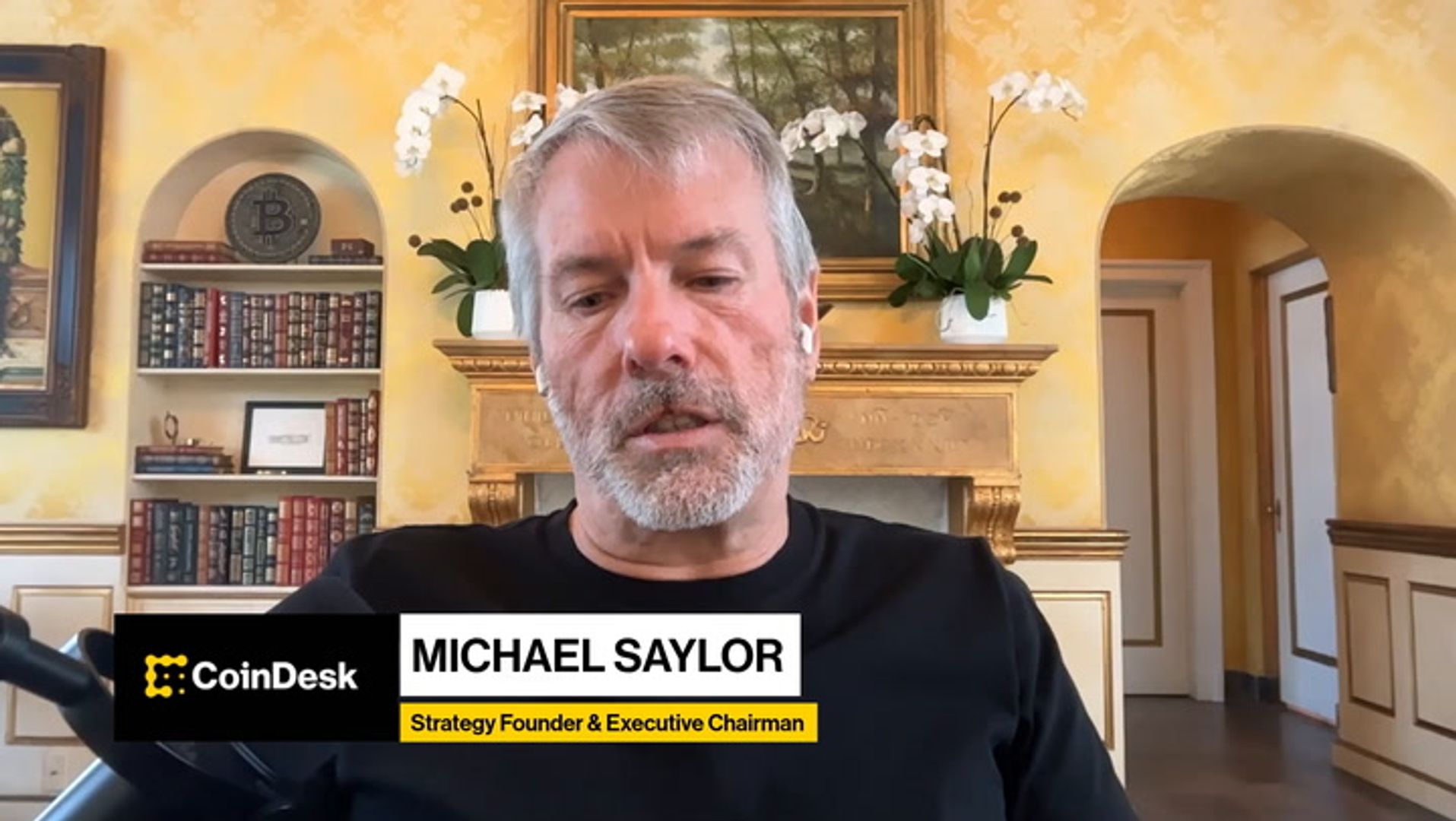
Strategy (MSTR) news: Michael Saylor gets into it with X critics
Share this article
Strategy’s BTC Yield fell from 13.0% to 12.8% following its latest bitcoin purchase, prompting a debate on X over whether the purchase was dilutive to shareholders.
By James Van Straten|Edited by Stephen Alpher
Jun 10, 2026, 1:56 p.m. 2 min read

- Strategy’s BTC Yield dropped to 12.8% from 13.0% despite the acquisition of 1,550 BTC, leading bitcoin advocate Matthew Kratter to argue the transaction was dilutive on a bitcoin-per-share basis.
- Michael Saylor countered that BTC Yield is a narrow metric that excludes cash holdings, arguing the addition of roughly $100 million to Strategy’s U.S. dollar reserve made the transaction accretive when total assets are considered.
Tempers are flaring as the bitcoin BTC$60,930.61 bear market deepens.
Strategy’s (MSTR) latest bitcoin purchase has sparked a public debate on X between Executive Chairman Michael Saylor and bitcoin advocate Matthew Kratter over whether the company’s most recent capital raise was accretive or dilutive for shareholders.
The disagreement centers on Strategy’s own bitcoin performance metric, BTC Yield, which is designed to track changes in bitcoin holdings per assumed diluted share. According to Strategy’s latest figures, BTC Yield fell from 13.0% on June 1 to 12.8% on June 8, after the company acquired an additional 1,550 BTC.
Kratter argued that the decline shows the transaction was dilutive on a bitcoin-per-share basis. Over the same period, Strategy’s bitcoin holdings rose from 843,706 BTC to 845,256 BTC, while assumed diluted shares outstanding increased from 382.756 million to 384.180 million. BTC Gain YTD also fell from 87,754 BTC to 86,328 BTC.
Saylor pushed back, saying BTC Yield is a narrow KPI that measures only bitcoin per share, not total shareholder accretion. Saylor said the transaction also added approximately $100 million of U.S. dollar reserves, taking the total USD reserve to $1 billion, making the deal accretive when both bitcoin and cash are included.
If viewed strictly through BTC Yield, the latest raise appears dilutive. But if cash reserves and broader balance-sheet effects are included, Saylor argues that the transaction improved shareholder value.
Others jumped in. “Notice they keep changing the rules to fit the financial alchemy they’re doing,” sniped Wazz. “First $BTC yield was boasted everywhere and plastered accross every buy announcement as the standard accretive metric. Now it’s a ‘narrow KPI’ which is irrelevant.”
“As a short seller, I’ve watched innumerable companies ‘move the goalposts,’ and try and focus the market on new metrics when old ones aren’t showing the story they want them to anymore,” wrote Quoth the Raven. “Sometimes, companies outright delete key performance indicators (KPIs) and use new ones.”
More For You
1 hour ago

Headline inflation rose an expected 0.5% in May, but the beat on the core rate — which cuts out food and energy costs — is pleasing markets.
What to know:
- May CPI rose 0.5% for the month of May and 4.2% year-over-year, both in line with forecasts.
- The core rate, though, rose just 0.2% in May against forecasts for 0.3%.
- Bitcoin was trading around $61,400 after the report.


Top Stories


