
liveUpdated 36 minutes ago
About 20% of miners are now unprofitable, and publicly traded miners sold more than 32,000 bitcoin in the first quarter to cover operating costs, more than they offloaded in all of 2025.
By Shaurya Malwa and Omkar Godbole
Share this post
After falling below $83 on Thursday, Strategy’s (MSTR) STRC rebounded to around $88 by the end of the session. The sharp decline had sparked concern among investors, and on Friday morning Strategy (MSTR) Executive Chairman Michael Saylor appeared to address the volatility with a post on X:
“Markets are closed today. Volatility is never easy. Bitcoin keeps working. So do we. Thank you for your support.”
The post marked the company’s only public comment following the sell-off.
Share this post
The digital credit market suffered one of its sharpest selloffs in history on Thursday, pushing Strategy’s STRC and Strive’s SATA sharply lower before both rebounded. The drop resulted from forced selling by leveraged investors, not any weakness in underlying credit quality, according to Strive CEO Matt Cole. For more, see James Van Straten’s report.
Share this post
Bitcoin continues to sell off alongside precious metals, while Fed funds futures continue to price in 50 basis points of rate hikes over the next six months. By January 2027, markets are expecting the federal funds rate to reach 4.00% to 4.25%.
Bitcoin has fallen below $63,000, down 1% over the past 24 hours. Gold has slipped to around $4,100 per ounce, declining 1.3% over the same period, while silver is holding above $65 per ounce, down 1% on the day.
Share this post
The Tron blockchain is busier than ever.
The number of daily confirmed transactions on the smart contract blockchain surpassed 14.3 million early this week, hitting a record high, according to data source TronScan.
The count has increased by 15% in four weeks.
That, however, has yet to translate into strength for the native token, TRX, which has dropped 10% to $0.32 in four weeks.
Share this post
Here’s a quick snapshot of major crypto market movements this morning in Europe. All the major CoinDesk indexes are lower, with the deepest declines in the DeFi Select Index (DFX), down 3.2% since midnight UTC, and the Computing Select Index (CPUS), which has dropped 2.2%. Bitcoin (BTC) and ether (ETH) both fell less than 1%, slipping for a fourth straight day, the longest streak in two weeks.
ENA, the governance token of stablecoin issuer Ethena, led declines in the DeFi index, dropping 9.2% since midnight. Ethena is a DeFI protocol known for its $4.5 billion market capitalization, dollar-pegged USDe, which generates yield by holding spot BTC, ETH and SOL and shorting an equivalent amount of derivatives to harvest the funding rate.
The CoinDesk 20 Index (CD20) has slipped 1.2% since midnight, 3.2% over 24 hours, with all members in the red.
Share this post
The U.S. and Iran signed their memorandum of understanding last Friday, following the G7 summit in France, formally ending the conflict that has roiled energy markets since February.
The 14-point framework halted hostilities, reopened the Strait of Hormuz, committed Iran to abandon nuclear weapons development, and will begin gradual U.S. sanctions relief, with a 60-day window to reach a full deal.
The bitcoin move is not a pure geopolitics play, said Mike McCluskey, co-founder of tx, in a note to CoinDesk.
The deal’s impact is “less immediate than commonly believed.” The real catalyst, he argues, is whether a sustained drop in oil prices cools inflation enough to shift central bank policy, a process that works with a lag.
The agreement is interim, sanctions persist, and the US has threatened renewed strikes if nuclear talks fail. Traders burned by collapsed ceasefires in April and early June are, in his words, “prioritizing pattern recognition over headlines.”
A genuine shift, McCluskey says, would need three things: the accord to hold, the Fed to acknowledge oil-driven disinflation, and ETF inflows to continue. Two already look shaky, with the Fed turning hawkish on Wednesday, raising its rate projections rather than nodding to disinflation, and spot bitcoin and ether ETFs swinging back to outflows the same day.
Share this post
Bitcoin isn’t the only asset feeling the heat from Wednesday’s hawkish Federal Reserve meeting. The Japanese yen is also under heavy pressure, sliding toward four-decade lows.
The yen weakened to 161.80 per U.S. dollar in early trading, just below its 2024 low of 161.95 and dangerously close to its weakest level in nearly 40 years.
The move comes after Fed officials raised their interest-rate projections for 2026 and 2027, reinforcing expectations for a stronger U.S. dollar across global markets. Although the Bank of Japan raised its key rate to 1% earlier this week, that remains far below the U.S. federal funds rate of 3.5%. This large interest-rate differential continues to work against the yen.
Adding to the pressure, the BOJ also decided to pause the tapering of its bond purchases, a dovish signal that largely offset the impact of its rate hike.
Meanwhile, Bitcoin has fallen sharply from Monday’s high near $67,000 to around $62,700, with selling accelerating in the wake of the Fed’s more hawkish stance.
Share this post
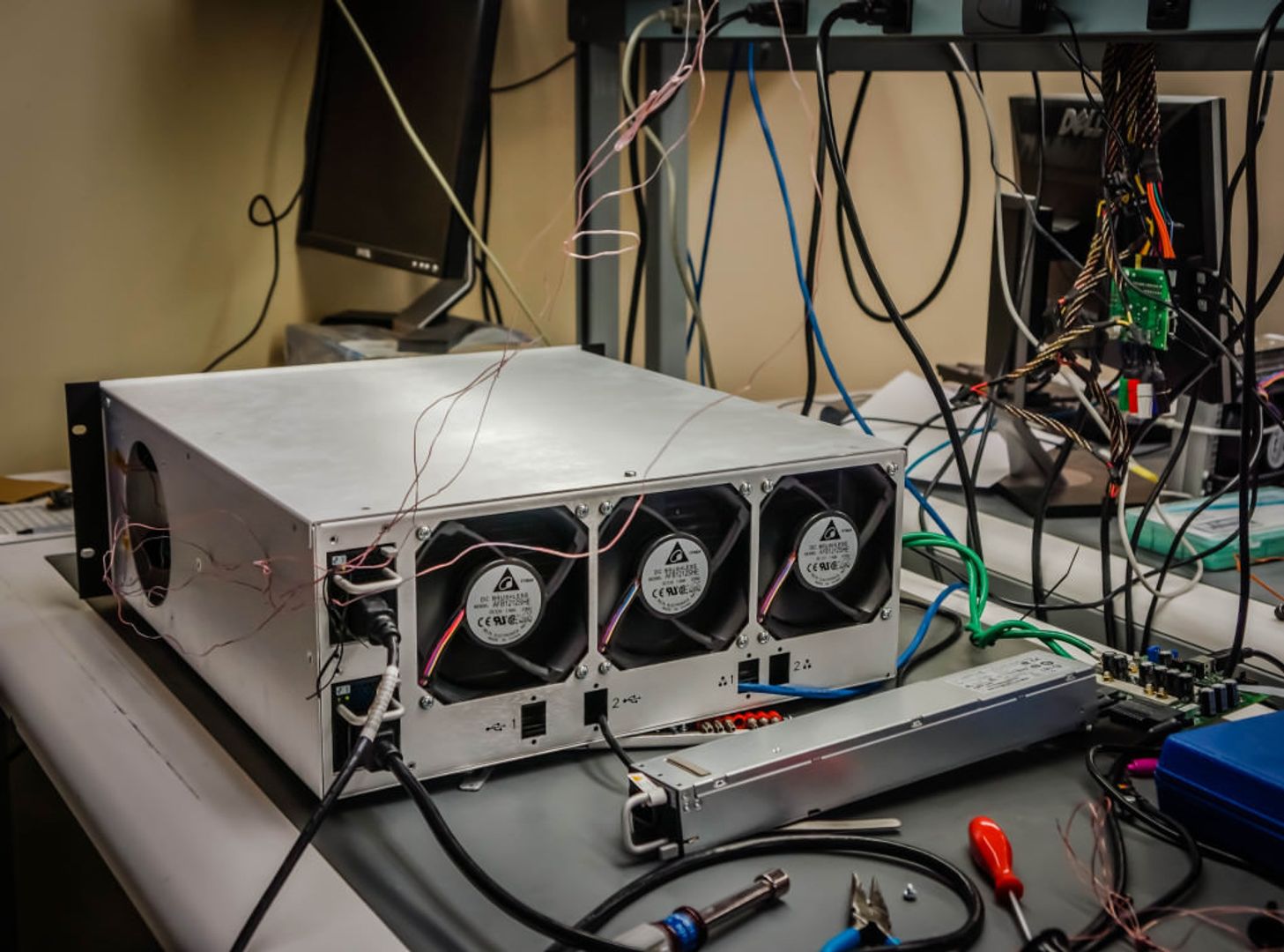
Bitcoin has spent five straight months trading below what it costs to produce, squeezing miners and forcing some to sell, JPMorgan said in a note. The bank pegs the cost to mine one bitcoin at about $78,000, well above the roughly $62,500 the asset fetches now.
The strain is showing and about 20% of miners are now unprofitable, the bank said citing CoinShares data, and publicly traded miners sold more than 32,000 bitcoin in the first quarter to cover operating costs, more than they offloaded in all of 2025.
The network is adjusting on its own. When the price drops below cost, higher-cost miners power down, the hashrate, or total computing power securing the network, falls, and mining difficulty, the automatic setting for how hard it is to mine, resets lower.
That played out in early June, when difficulty dropped 10%, the second decline of that size this year.
Miners are also reacting faster than before. JPMorgan says the sensitivity of difficulty to price has climbed, with more operators sitting near breakeven and flipping machines on or off as prices move. The bank expects larger and more frequent adjustments for as long as bitcoin stays below its production cost.
The outlook is cautious, but JPMorgan flags one upside. The weak sentiment around the sector could itself prove a bullish contrarian signal, echoing the run of accumulation readings, from whale buying to falling exchange reserves, pointing the same way this month.

- 1
- 2
- 3
- 4
- 5
- 6
- 7
- 8
- 9
- 10


In May, combined exchange volumes fell 3.45% to $4.41T; the lowest since September 2024. RWA perpetual futures volumes rose 10.4% against the trend, hitting a new all-time high.
Jun 15, 2026
In May, combined exchange volumes fell 3.45% to $4.41T; the lowest since September 2024. RWA perpetual futures volumes rose 10.4% against the trend, hitting a new all-time high.
Why it matters:
In May, combined exchange volumes fell 3.45% to $4.41T; the lowest since September 2024. RWA perpetual futures volumes rose 10.4% against the trend, hitting a new all-time high.